




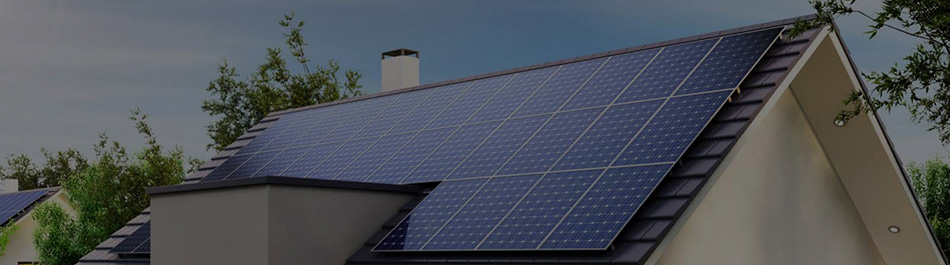
Solar panel cost is one of the first questions homeowners and businesses ask when considering solar energy. However, the price of solar panels is only one part of the total investment. A complete photovoltaic system also includes inverters, mounting structures, cables, installation, protection equipment and, in some cases, battery storage.
The more important question is not simply
“How much do solar panels cost?”
but
“How much will the complete solar system cost, how much can it save, and how quickly can it pay for itself?”
This guide explains solar panel cost in 2026, total system costs, solar ROI, payback periods and financing options such as PAYGo and Power Purchase Agreements (PPAs), helping homeowners and businesses make more informed solar investment decisions.
Solar Panel Cost vs. Total Solar System Cost
One of the most common mistakes when comparing solar quotations is looking only at the price of the solar panels.
Solar panels are only one component of a complete photovoltaic system. Depending on the project, solar panels may account for roughly 25%–35% of total project costs, while the remaining costs come from other equipment, installation and services.
A typical solar system may include:
- Mounting and racking system
- DC and AC cables
- Combiner boxes and protection devices
- Battery storage, if required
- Installation and electrical work
- System design and engineering
- Transportation and logistics
- Commissioning and testing
- Monitoring equipment
These additional components are commonly referred to as Balance of System (BOS) costs.
This means that a cheaper solar panel does not necessarily result in a cheaper solar project. An unsuitable inverter, poor-quality mounting system or complicated installation environment can increase the total project cost and affect long-term system performance.
When comparing suppliers, it is therefore better to compare the complete installed solar system cost rather than simply comparing the price of individual panels or the price per watt.
How Much Does a Solar System Cost in 2026?
The total solar system cost depends on system capacity, equipment selection, installation conditions, location, electricity consumption and whether battery storage is included.
Instead of using one universal price, it is more useful to consider different system sizes and applications.
3kW–5kW Solar System for Homes
A 3kW–5kW solar system can be suitable for many small and medium-sized homes.
Depending on household electricity consumption, a system in this range may help power:
- Lighting
- Refrigerators
- TVs
- Computers
- Fans
- Washing machines
- Small kitchen appliances
For homes that experience frequent power outages, a hybrid solar system with battery storage can provide backup power when the grid is unavailable.
However, the final solar panel cost should not be calculated from panel prices alone. The inverter, mounting system, wiring, installation and battery requirements can significantly affect the total investment.
10kW–50kW Solar System for Businesses
A 10kW–50kW solar system can be suitable for offices, shops, warehouses, cold-storage facilities, workshops and small factories.
Commercial solar projects can have a strong financial advantage because many businesses consume electricity during the daytime, when solar panels are producing electricity.
Solar power can be used for:
- Refrigeration equipment
- Air conditioning
- Pumps
- Lighting
- Motors
- Production machinery
- Computers and office equipment
For businesses, the solar system cost for business should be evaluated alongside electricity consumption, operating hours, load profiles and available installation space.
A properly sized commercial solar system can reduce electricity purchased from the grid while providing greater control over long-term energy costs.
What Determines Solar Panel Cost?
Two solar projects with exactly the same capacity can have very different total prices.
Several factors influence the final solar panel cost and overall system investment.
1. Solar Panel Technology
Panel efficiency, power output, technology and warranty can influence the purchase price.
Higher-efficiency modules can be particularly valuable when roof or land area is limited because they can generate more electricity from the same installation area.
However, the highest-priced panel is not automatically the most cost-effective option. Buyers should consider the relationship between
- Product price
- Product warranty
- Performance degradation
- Expected service life
2. Inverter Selection
The inverter is one of the most important components of a solar power system.
Solar panels generate DC electricity, while most household and commercial electrical equipment uses AC electricity. The inverter converts the electricity into a usable form and manages the interaction between the solar system, electrical loads and, where applicable, the grid or battery.
Depending on the application, customers may choose:
Selecting the correct inverter can have a significant impact on system reliability, efficiency and long-term operating costs.
3. Battery Storage
Adding battery storage can increase the initial solar system cost, but it can also provide additional value.
A battery energy storage system can help provide:
- Backup power during outages
- Higher solar self-consumption
- Reduced dependence on the grid
- Energy shifting from daytime to evening
- Greater energy resilience
For customers who experience unreliable grid electricity, the value of battery storage may extend beyond electricity bill savings because it can also reduce losses caused by power interruptions.
4. Installation Conditions
Installation costs can vary considerably between projects.
Factors that may increase installation costs include:
- Complex roof structures
- Long cable distances
- Difficult site access
- Structural reinforcement<gt;
- Electrical upgrades
- High installation locations
- Additional safety requirements
A simple rooftop installation can therefore have a very different total cost from a complex commercial or industrial project.
How to Calculate Solar ROI and Payback Period
The purchase price alone does not determine whether a solar project is financially attractive.
A solar ROI calculator should consider the total investment and the financial benefits generated by the system.
A simple payback formula is:
Payback Period = Total Solar System Cost ÷ Annual Financial Savings
For projects where solar also reduces losses caused by power outages, the calculation can be expanded:
PaybPeriod = Total System Cost ÷ (Annual Electricity Savings + Reduced Outage Losses)
For example, suppose a commercial solar project costs $30,000 and reduces electricity and outage-related costs by approximately $7,500 per year.
The estimated payback period would be:
$30,000 ÷ $7,500 = 4 years
After the initial investment has been recovered, the system can continue generating electricity and reducing grid electricity purchases for many additional years.
However, actual solar ROI depends on electricity prices, solar irradiation, system performance, self-consumption, maintenance costs, financing costs and battery requirements.
For this reason, a professional solar assessment is more reliable than applying a standard payback period to every project.
What Information Should You Put Into a Solar ROI Calculator?
A basic solar ROI calculator can start with several key figures:
1. Total system purchase and installation cost
2. Annual electricity consumption
3. Current electricity price
4. Expected annual solar generation
5. Percentage of solar electricity consumed directly
6. Expected electricity price increases
7. Battery capacity, if applicable
8. Annual maintenance costs
9. Financing costs
10. Expected system lifetime
For commercial projects, additional factors may include demand charges, operating schedules, production losses and electricity consumption during peak periods.
A correctly sized solar system can sometimes produce a better ROI than a larger system with a higher initial investment.
Can Solar Pay for Itself in 3–5 Years?
A 3–5 year solar payback period is possible for some projects, particularly where electricity prices are relatively high, solar resources are strong and a large percentage of generated electricity is consumed directly.
However, this should not be treated as a guaranteed result.
For example, a commercial facility that consumes large amounts of electricity during daylight hours may achieve a faster payback because much of the solar electricity can be used immediately.
By contrast, a residential customer with low daytime electricity consumption may have a longer payback period, particularly if excess electricity has limited economic value.
The best way to estimate payback is therefore to analyze the customer’s actual electricity bills, load profile, solar resource and system design.
Solar Financing Options: PAYGo, PPA and Green Loans
The upfront investment is one of the biggest barriers to solar adoption.
Fortunately, customers do not always need to pay the entire solar system cost upfront.
Several financing models can make solar more accessible.
PAYGo Solar
PAYGo (Pay-As-You-Go solar) allows customers to pay for a solar system through smaller scheduled payments rather than making one large upfront payment.
This model can be particularly useful for residential customers, small businesses and markets where access to traditional financing is limited.
Instead of focusing only on the purchase price, customers can compare their monthly PAYGo payment with the electricity costs they are replacing.
For solar distributors and solution providers, PAYGo can also make solar products accessible to a wider customer base.
Power Purchase Agreement (PPA)
A Power Purchase Agreement (PPA) is another financing model for solar projects.
Under a typical PPA, a third-party company finances, owns or operates the solar installation, while the customer purchases the electricity generated by the system at an agreed price.
The customer can reduce upfront capital expenditure while gaining access to solar electricity.
PPAs can be particularly attractive for commercial and industrial customers that want to reduce electricity costs without purchasing and maintaining the entire solar installation themselves.
Green Loans and Bank Financing
Some customers prefer to own their solar system while spreading the investment over several years.
In this situation, a green loan or renewable-energy financing product may be appropriate.
Before choosing a financing option, compare:
- Interest rate
- Loan duration
- Monthly repayment
- Total financing cost
- Expected annual energy savings
- Estimated solar payback period
The goal is to make sure that expected energy savings provide sufficient value relative to the cost of financing.
How to Reduce Your Total Solar Investment Cost
Reducing solar investment costs does not always mean buying the cheapest equipment.
Instead, focus on the cost of useful electricity generated over the system’s lifetime.
A well-designed system should balance:
- Equipment quality
- System efficiency
- Installation cost
- Energy production
- Warranty
- Maintenance
- Battery requirements
- Expected system lifetime
For businesses, accurate system sizing is particularly important.
An oversized system may increase upfront costs without producing proportional financial benefits, while an undersized system may fail to reduce enough grid electricity consumption.
The objective should be to find the right balance between initial solar panel cost, energy generation, reliability and long-term ROI.
What Should You Ask a Solar Supplier Before Buying?
Before choosing a supplier, do not compare quotations based only on the price per watt.
Ask for a complete quotation that clearly explains the equipment, installation and other project costs.
Important questions include:
- What is included in the quoted price?
- What solar panels and inverter are being supplied?
- Is battery storage included?
- What is the expected annual energy production?
- What are the product warranties?
- What is the estimated payback period?
- What financing options are available?
- What after-sales service is provided?
- Can the system be customized for my electricity consumption?
A reliable solar supplier should help you understand not only how much the system costs, but also how much financial value it can generate over its lifetime.
Choose Solar Based on Lifetime Value, Not Just Initial Price
The cheapest quotation is not necessarily the best solar investment.
A lower initial solar panel cost may come with lower efficiency, shorter warranties, unsuitable system components or higher long-term maintenance costs.
Instead, customers should evaluate the complete picture:
Initial Cost → Annual Energy Production → Electricity Savings → Maintenance → Financing → Payback Period → Long-Term ROI
This approach makes it easier to compare different solar solutions on a like-for-like basis.
At Green Power, solar solutions can be designed for residential, commercial and renewable-energy applications. Instead of simply supplying individual solar panels, Green Power can provide solutions that integrate solar modules, inverters and energy storage according to the customer’s application and energy requirements.
If you are evaluating a solar project, contact Green Power for a customized solar system assessment and quotation.
Final Thoughts: Calculate the Investment Before Buying Solar
The real solar panel cost is more than the price shown on a panel quotation.
A complete investment calculation should consider solar panels, BOS components, installation, energy savings, battery requirements, financing and long-term system performance.
For homeowners, the key question may be how much electricity can be saved each month.
For businesses, the calculation should go further and consider electricity consumption patterns, operating hours, peak electricity costs and losses caused by power interruptions.
Whether you choose an upfront purchase, PAYGo, a PPA or green financing, the objective is the same: turn solar energy from a large upfront expense into a long-term energy investment with measurable financial returns.
Before making a purchase, calculate the complete system cost and expected payback period based on your actual electricity consumption. A properly designed system can help you reduce electricity costs, improve energy resilience and create long-term value.
Ready to evaluate your solar investment? Contact Green Power to discuss your solar panels, energy storage or commercial solar requirements.
–
Website:www.fgreenpv.com
Email:Info@fgreenpv.com
WhatsApp:+86 17311228539
Post time: Aug-18-2026


