




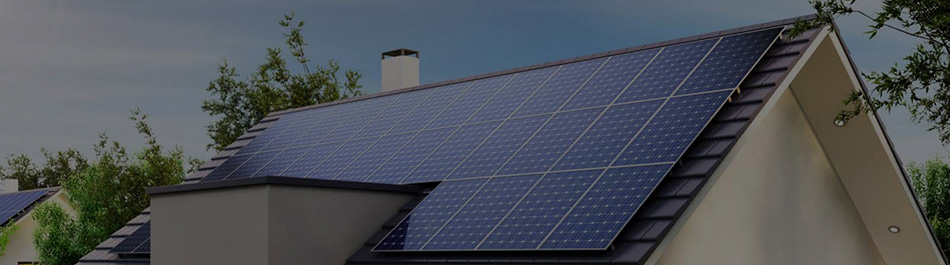
Utility-scale and behind-the-meter storage are surging in 2026, driven by one core shift: solar power is no longer just clean, it is dispatchable. Combined with AI-driven battery scheduling, commercial and industrial (C&I) energy storage systems now deliver measurable reductions in demand charges, stronger grid resilience, and faster payback than at any point in the past decade. This guide breaks down what dispatchable solar+storage means for facility operators and how to size, certify, and justify a project in 2026.
What Is Dispatchable Solar + Storage?
Dispatchable solar + storage means pairing a solar array with a battery energy storage system (BESS) so that stored solar energy can be released on demand — during a grid outage, a peak-demand period, or whenever electricity pricing makes grid power expensive. Unlike solar-only installations, which produce power only when the sun is shining, a hybrid solar+storage system gives facility operators control over exactly when that energy is used, turning an intermittent resource into a reliable, schedulable one.
For commercial and industrial buyers, this distinction is what separates a sustainability project from an operational asset: dispatchable power can be timed to avoid the most expensive grid conditions, rather than simply reducing a facility’s carbon footprint.
AI Battery Scheduling: How It Reduces Demand Charges
The single biggest operational advance in C&I storage this year is AI-driven battery scheduling. Rather than relying on fixed charge and discharge schedules, modern energy management systems (EMS) use machine learning to forecast a facility’s load profile, weather-driven solar output, and utility tariff structure, then automatically time battery charging and discharging to:
Shave peak demand spikes that trigger the highest utility demand charges
Shift battery discharge to coincide with the most expensive time-of-use rate windows
Capture value from negative or near-zero tariff periods by charging when grid power is cheapest or even incentivized
For facilities where demand charges can represent 30-50% of a commercial electricity bill, AI-optimized peak shaving alone can materially change the economics of a storage investment. Because these systems learn and adjust continuously, their performance typically improves over the first several months of operation as the model refines its load and generation forecasts.
Commercial vs Industrial Storage: System Sizing Guide
| Facility type | Typical load profile | Recommended ESS role |
| Small commercial (retail, office) | Moderate, business-hours peak | Peak shaving + backup power |
| Mid-size commercial (warehouse, mixed-use C&I) | Higher, sustained daytime peaks | Demand charge management + solar self-consumption |
| Industrial (manufacturing, factories) | High, continuous load with process spikes | Dispatchable power + critical-process backup + grid services |
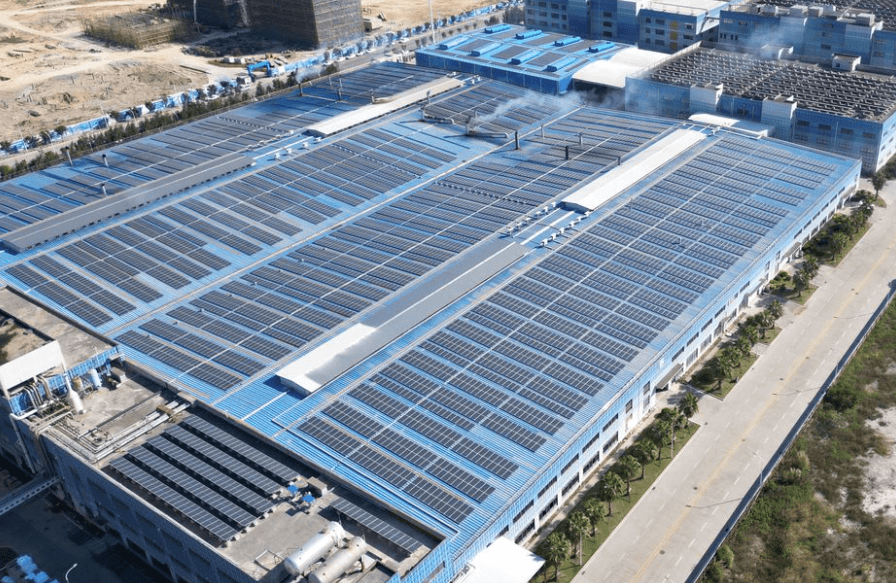
Because industrial facilities often run multi-shift operations with sudden load spikes from heavy machinery, their storage systems are typically sized not just for total energy capacity (kWh) but for peak power delivery (kW), to smooth out short, high-demand events that would otherwise trigger costly demand charges or stress sensitive equipment.
ROI and Payback for C&I Battery Storage Projects
According to recent 2026 industry reports by ZincFive, over 84% of data center and industrial facilities prioritize Total Cost of Ownership (TCO), while 57% highlight the need for higher power density to manage AI-driven dynamic power spikes.
C&I battery storage economics in 2026 are increasingly favorable, driven by three converging trends: falling battery cell costs, AI-optimized dispatch that extracts more value per kWh installed, and expanding utility and government incentive programs for behind-the-meter storage.
While payback periods vary significantly by region, tariff structure, and facility load profile, well-designed hybrid solar+storage projects are increasingly delivering payback well within the useful life of the first battery pack — a threshold that was much harder to reach just a few years ago. Facilities that combine storage with existing solar generation see the strongest returns, since self-consumption of solar energy avoids both demand charges and volumetric energy costs simultaneously, rather than addressing only one side of the utility bill.
Grid Resilience for Factories and Commercial Buildings
Beyond cost savings, grid resilience has become a primary purchase driver for C&I storage buyers in 2026. Aging grid infrastructure, extreme weather events, and a rising frequency of localized outages mean that even a few hours of unplanned downtime can cost a manufacturing facility far more than the price of a backup system.
A properly sized industrial energy storage system keeps critical processes, refrigeration, security, and life-safety systems running through an outage, while also providing ancillary grid-support value in regions with demand-response or frequency-regulation programs. For facilities running temperature-sensitive processes or continuous production lines, this resilience value can outweigh the direct energy-cost savings entirely.
Key Certifications and Safety Standards for C&I Battery Systems
Given the scale and continuous-duty demands of commercial and industrial installations, certification matters even more than in residential settings. As highlighted by UL Solutions, the sudden influx of AI power demands makes rigorous safety certifications like IEC62619 and UN38.3 indispensable to prevent thermal runaway in continuous-duty industrial BESSAs highlighted by UL Solutions, the sudden influx of AI power demands makes rigorous safety certifications like IEC62619 and UN38.3 indispensable to prevent thermal runaway in continuous-duty industrial BESS.Facility managers and EPCs should confirm the following before selecting a supplier:
IEC62619 — safety standard for industrial and stationary lithium battery systems
UN38.3 — required transport safety certification for lithium batteries
IEC61000 — electromagnetic compatibility, critical for facilities with sensitive equipment
UL / CB / BIS certification — recognized across North American, international, and Indian markets respectively
A system built to these standards, backed by a robust battery management system and documented thermal safety design, reduces both operational risk and insurance or compliance friction for facility owners.
The Shift Toward Hybrid, Utility-Interactive Projects
A related trend reinforcing AI-driven dispatch is the growing interconnection between behind-the-meter C&I storage and the wider grid.Market research from DataM Intelligence underscores that high-density C&I applications are accelerating the transition from legacy battery systems to lithium (LFP) solutions capable of handling 10–30kW+ rack loads. Rather than operating as an isolated backup asset, modern battery energy storage systems increasingly participate in demand-response programs, frequency regulation markets, and virtual power plant (VPP) aggregations run by utilities or third-party aggregators. For facility owners, this means a well-designed storage system can generate a secondary revenue stream on top of direct energy-bill savings, by making a portion of its capacity available to the grid operator during system-wide stress events. Realizing this value requires an EMS capable of communicating with utility or aggregator dispatch signals in addition to optimizing for the facility’s own load — a capability that is becoming a standard feature rather than a premium add-on in 2026-generation commercial storage platforms.
Frequently Asked Questions
Q: How does AI improve commercial battery storage efficiency?
A: AI-driven energy management systems forecast load, solar output, and utility pricing to automatically schedule charging and discharging, maximizing demand-charge savings and time-of-use arbitrage without manual intervention.
Q: What size ESS does a factory need?
A: Sizing depends on both total energy needs (kWh) and peak power delivery (kW) required to smooth out process-driven load spikes; a proper sizing study considers historical load data, backup requirements, and paired solar generation.
Q: How fast is the ROI for commercial solar + storage?
A: Payback timelines vary by region and tariff structure, but falling battery costs and AI-optimized dispatch have significantly shortened payback periods compared to just a few years ago, especially for facilities with high demand charges.
Q: Is hybrid solar+storage better than grid-only power for businesses?
A: For facilities facing high demand charges, unreliable grid power, or exposure to time-of-use pricing, hybrid solar+storage typically outperforms grid-only power by reducing both energy costs and outage risk at the same time.
Q: Can a commercial storage system earn revenue beyond bill savings?
A: Yes. In many regions, C&I storage systems can enroll in demand-response or virtual power plant programs, earning additional revenue by making reserve capacity available to the grid operator during peak stress periods.
Building Resilient, Dispatchable Power for Your Facility
As commercial and industrial storage shifts from a sustainability initiative to a core operational strategy, the systems behind it need to match that responsibility. Explore GREEN POWER’s Industrial and Commercial Energy Storage System product line for certified, scalable BESS solutions, or see our Commercial & Industrial Energy Storage Solution page for full project configurations. For residential-scale storage trends shaping the broader market, read our companion article on LiFePO4 home battery storage.
Website:www.fgreenpv.com
Email:[email protected]
WhatsApp:+86 17311228539
Post time: Jul-27-2026


