




Home battery storage is no longer a premium add-on for eco-conscious homeowners — it has become essential infrastructure for energy resilience and cost control. At the center of this shift is Lithium Iron Phosphate (LiFePO4) chemistry, which has emerged as the dominant technology for residential energy storage in 2026, thanks to its long cycle life, thermal stability, and falling cost per kWh. This guide explains why LiFePO4 has won the residential storage market, what it costs, and how to choose a system built to last.
What Is LiFePO4 and Why It Matters for Home Storage
LiFePO4 (Lithium Iron Phosphate) is a lithium-ion battery chemistry that replaces the cobalt-based cathode found in older NMC (Nickel Manganese Cobalt) batteries with a stable iron-phosphate structure. This single change delivers three practical advantages for homeowners: dramatically improved safety, a much longer usable lifespan, and stable performance across thousands of daily charge-discharge cycles. For a home energy system that will sit in a garage, utility room, or outdoor enclosure for a decade or more, these properties are not optional extras — they are the baseline requirement that separates a long-term investment from a costly replacement cycle.
Unlike earlier lithium chemistries that required active cooling and careful voltage management to avoid degradation, LiFePO4 cells tolerate a wider range of temperatures and charge states without meaningful capacity loss. That tolerance is a major reason manufacturers can now offer longer warranties — often 10 years or more — with confidence that the underlying cell chemistry will still perform near its rated capacity at the end of that period.
LiFePO4 vs NMC: Safety and Lifespan Comparison
The two chemistries differ sharply on the metrics that matter most for residential use:
| Feature | LiFePO4 | NMC |
| Thermal runaway risk | Very low | Higher |
| Typical cycle life | 6,000+ cycles | 2,000-3,000 cycles |
| Expected lifespan | 10-15 years | 5-8 years |
| Cobalt content | None | Yes |
| Performance in heat | Stable | Degrades faster |
Gel Battery vs Lithium Battery
Because LiFePO4 batteries do not experience thermal runaway the way cobalt-based chemistries can, they are considered the safer choice for indoor residential installation — a major reason certification bodies and insurers increasingly favor them for home use. This safety margin also explains why LiFePO4 has become the default chemistry for garage-mounted and basement-mounted battery cabinets, where NMC systems historically faced more installation restrictions.
How Much Does Home Battery Storage Cost in 2026
Installed home battery storage in 2026 typically falls between $750 and $1,250 per usable kWh, depending on system size, inverter integration, and installation complexity. With falling lithium prices and increasing manufacturing scale, payback periods have shortened to 5-8 years in many mature solar markets — down from 10 or more years just a few years ago.
For homeowners pairing storage with an existing solar array, the economics are even more favorable, since stored solar energy directly offsets peak-rate grid electricity or protects against outages. In markets that have introduced time-of-use or negative-tariff pricing, a well-managed battery can capture additional savings by charging during low-cost or incentivized periods and discharging during expensive peak windows — turning the battery into an active cost-control tool rather than a passive backup device.
Modular & Scalable System Design
One of the clearest trends in 2026 is the shift toward modular, expandable battery architecture. Rather than committing to a single fixed-capacity unit, homeowners can now start with a smaller 48V LiFePO4 battery pack and add additional modules as budget allows or energy needs grow — for a new EV charger, a home addition, or simply more backup runtime.
This modular approach lowers the barrier to entry while protecting the initial investment, since additional capacity slots into the same battery management system (BMS) and inverter setup rather than requiring a full system replacement. For installers and homeowners alike, modularity also simplifies maintenance: a single faulty module can be serviced or replaced without taking the entire system offline.
Grid Instability and Backup Power: The New Driver
Perhaps the biggest shift in 2026 is why people are buying home batteries in the first place. A few years ago, the primary driver was sustainability. Today, grid instability — from extreme weather events to aging infrastructure — has made backup power a practical necessity rather than a luxury.
Combined with the rollout of dynamic and negative-tariff electricity pricing in some markets, a home battery now serves double duty: protecting against blackouts while actively lowering electricity bills through smart, AI-assisted charge and discharge scheduling. Homeowners increasingly expect their storage system to make these decisions automatically, without requiring manual monitoring of grid conditions or weather forecasts.
How to Choose a Certified Home Energy Storage System
Not all LiFePO4 systems are built to the same standard. Buyers evaluating a home energy storage system should confirm the following certifications before purchase:
UN38.3 — mandatory transport safety certification for lithium batteries
IEC62619 — safety standard for stationary lithium battery energy storage systems
IEC61215 / IEC61730 — required for paired solar panel components
UL / CB certification — recognized safety marks for North American and international markets
A certified system, backed by a documented battery management system and thermal protection design, is the clearest signal that a manufacturer has engineered for long-term residential safety rather than short-term cost-cutting. Homeowners should ask suppliers for certification documentation directly rather than relying on marketing claims alone.
Warranty and Long-Term Value
Because LiFePO4 cells degrade more slowly and tolerate deeper, more frequent cycling than older chemistries, manufacturers are now able to back residential systems with warranties of 10 years or longer while still guaranteeing a meaningful percentage of original capacity — commonly 70-80% — at the end of the warranty term. This shift matters for homeowners comparing quotes: a lower upfront price on a shorter-warranty NMC system can easily cost more over a 15-year horizon once a mid-life battery replacement is factored in. When evaluating quotes, homeowners should compare total cost of ownership across the expected lifespan of the system, not just the sticker price of the initial installation, and should confirm whether the warranty covers capacity degradation, defects, or both.
Frequently Asked Questions(FAQ)
Q: How long do LiFePO4 home batteries last?
A: Most LiFePO4 home batteries are rated for 6,000 or more charge cycles, translating to an expected service life of 10-15 years under typical daily use.
Q: Is LiFePO4 safer than other lithium batteries?
A: Yes. LiFePO4′s iron-phosphate cathode is chemically stable and does not support the same thermal runaway reactions seen in cobalt-based NMC batteries, making it the preferred choice for indoor residential installation.
Q: Can I expand my home battery system later?
A: Modern modular 48V LiFePO4 systems are designed for expansion — additional battery modules can typically be added to the same inverter and battery management system as household energy needs grow.
Q: What size battery do I need for backup power during an outage?
A: Sizing depends on household load, but as a starting point, most homes need 10-20 kWh of usable capacity to keep essential circuits — refrigeration, lighting, internet, and medical equipment — running through a multi-hour outage.
Q: Does a home battery work without solar panels?
A: Yes. A LiFePO4 home battery can be charged directly from the grid and used purely for backup power or time-of-use rate arbitrage, though pairing it with solar panels maximizes savings by storing free daytime generation for evening or outage use.
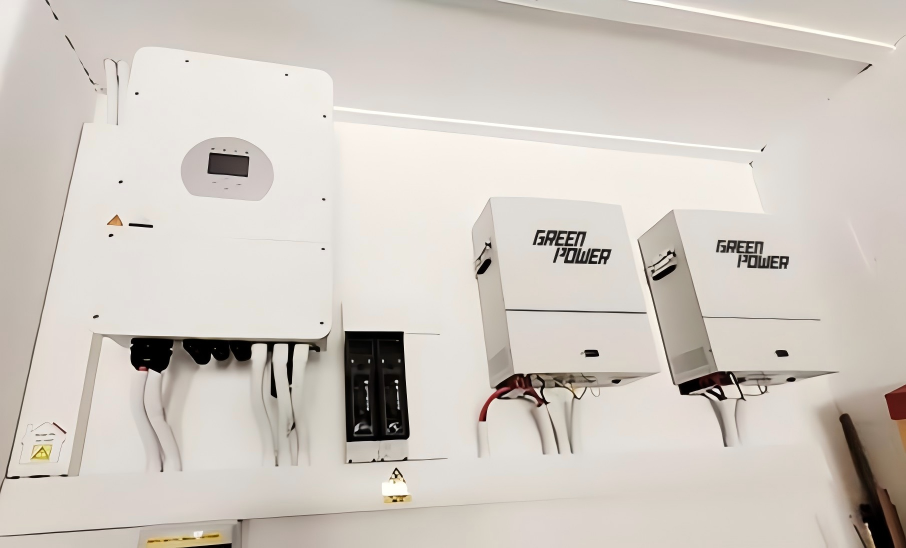
As LiFePO4 chemistry becomes the residential storage standard, the systems built around it — inverter integration, BMS design, and certification — matter as much as the battery cells themselves. Explore GREEN POWER’s Home Energy System product line for certified, modular LiFePO4 storage designed for real-world grid instability, or see our Home Energy Storage Solution page for full system configurations. For businesses facing similar resilience and cost pressures at scale, read our companion article on AI-driven commercial and industrial energy storage.
-
If you’re interested in learning more about our solar energy storage offerings, we encourage you to explore our product line. We offer a range of panels and battery that are designed for various applications and budgets, so you’re sure to find the right solution for your needs.
Website:www.fgreenpv.com
Email:Info@fgreenpv.com
WhatsApp:+86 17311228539
Post time: Jul-24-2026


