





The global transition to electric vehicles (EV) is moving at a breakneck pace. Whether you are an individual EV owner looking for the best way to power your ride, or a business enterprise looking to future-proof your commercial real estate, understanding the infrastructure behind the green energy revolution is essential.
In this comprehensive guide, we will break down the mechanics, differences, benefits, and costs associated with EV charging piles and charging stations.
1. What Are EV Charging Piles and Charging Stations?
Let’s strip away the technical jargon.
An EV Charging Pile is essentially an outdoor energy outlet. Think of it as a smart, heavy-duty electronic post or wall-box installed in a parking spot that safely pumps electricity directly into an electric vehicle.
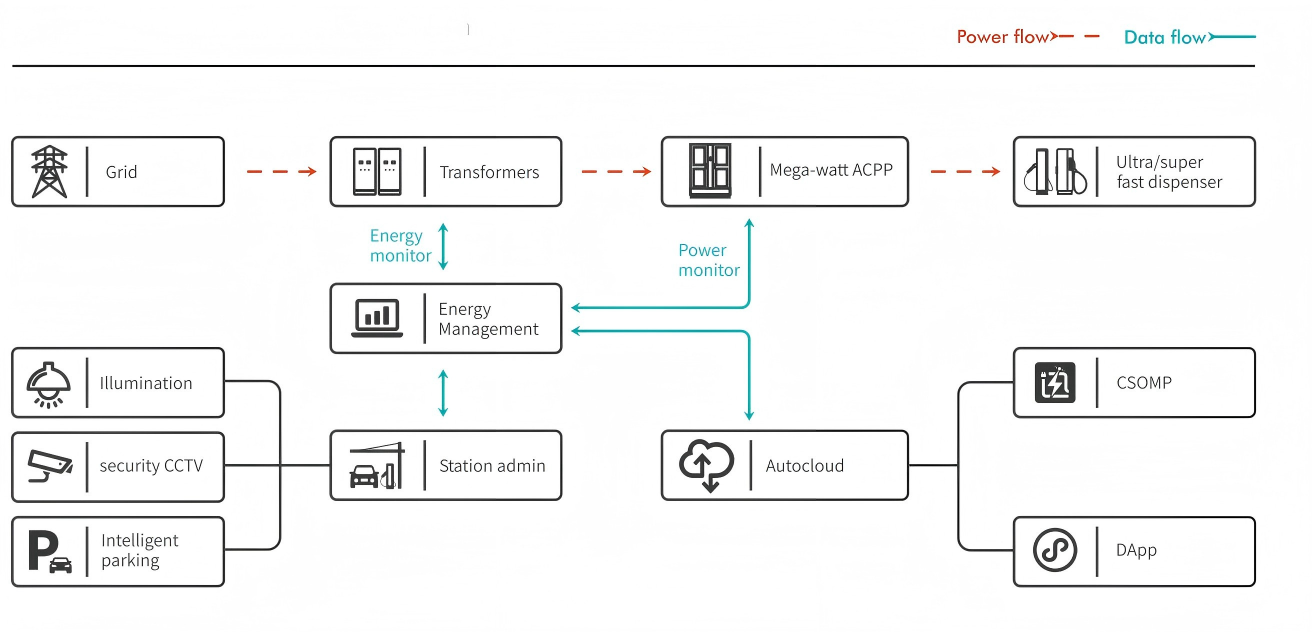
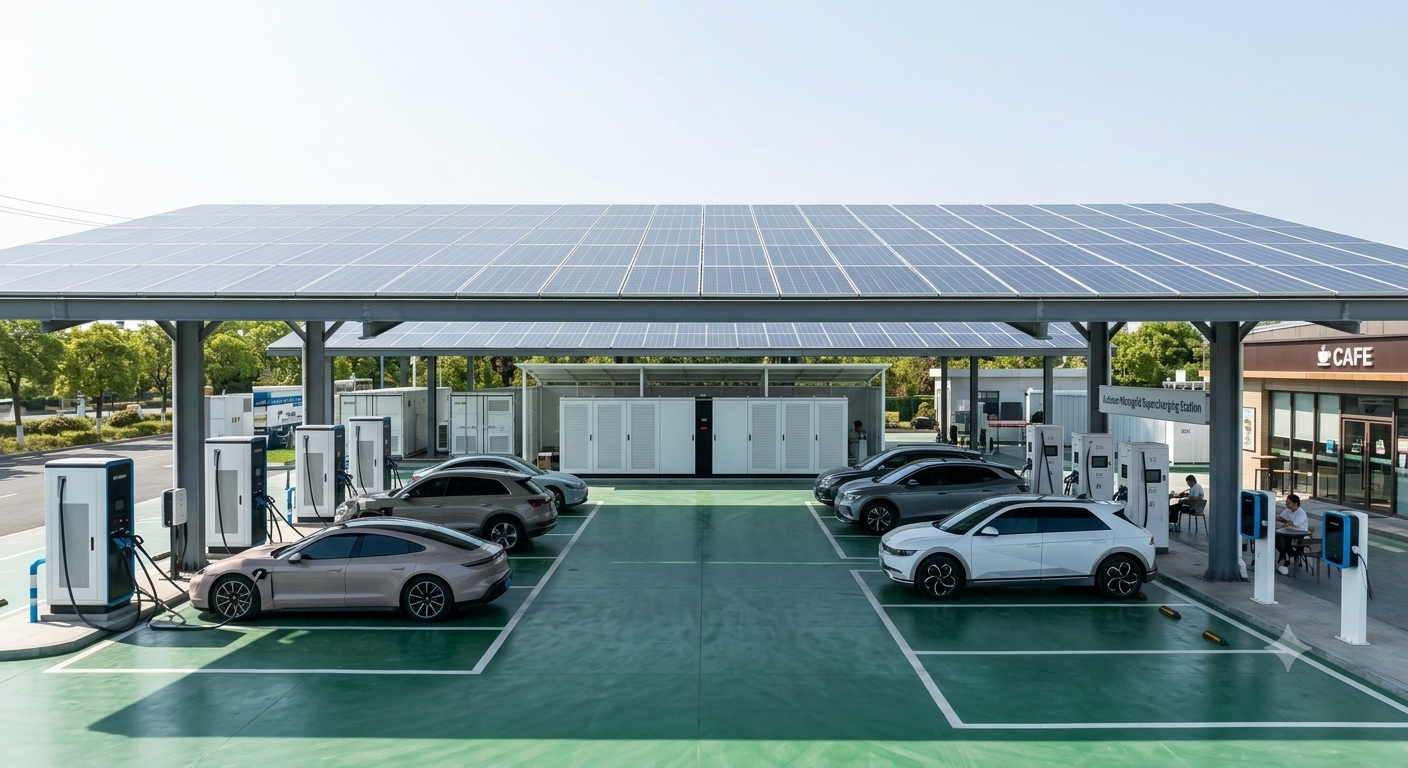
An EV Charging Station is the modern equivalent of a traditional gas station. It is a dedicated facility or location that houses a cluster of multiple charging piles, power cabinets, and sometimes integrated solar energy infrastructure to charge many vehicles simultaneously.
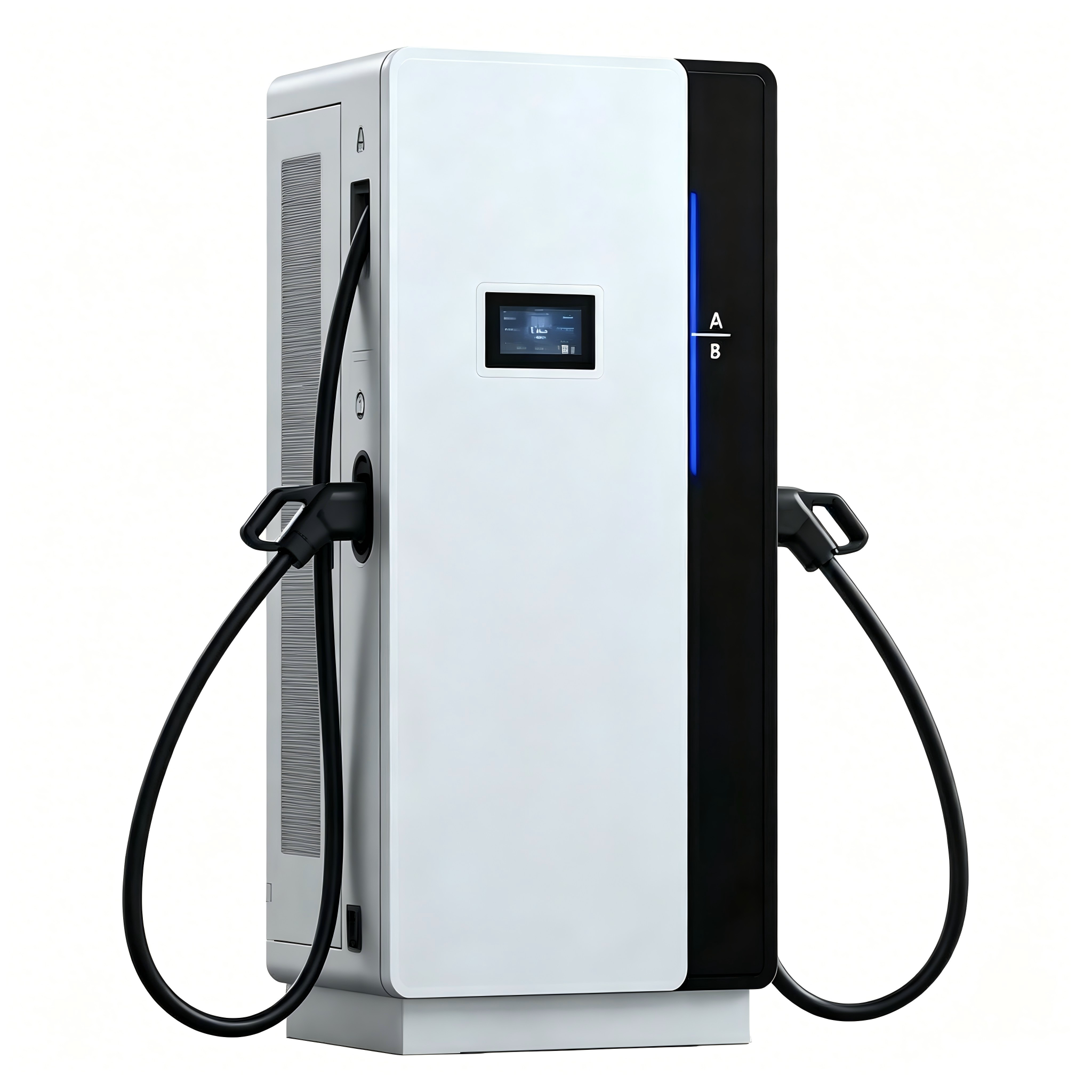
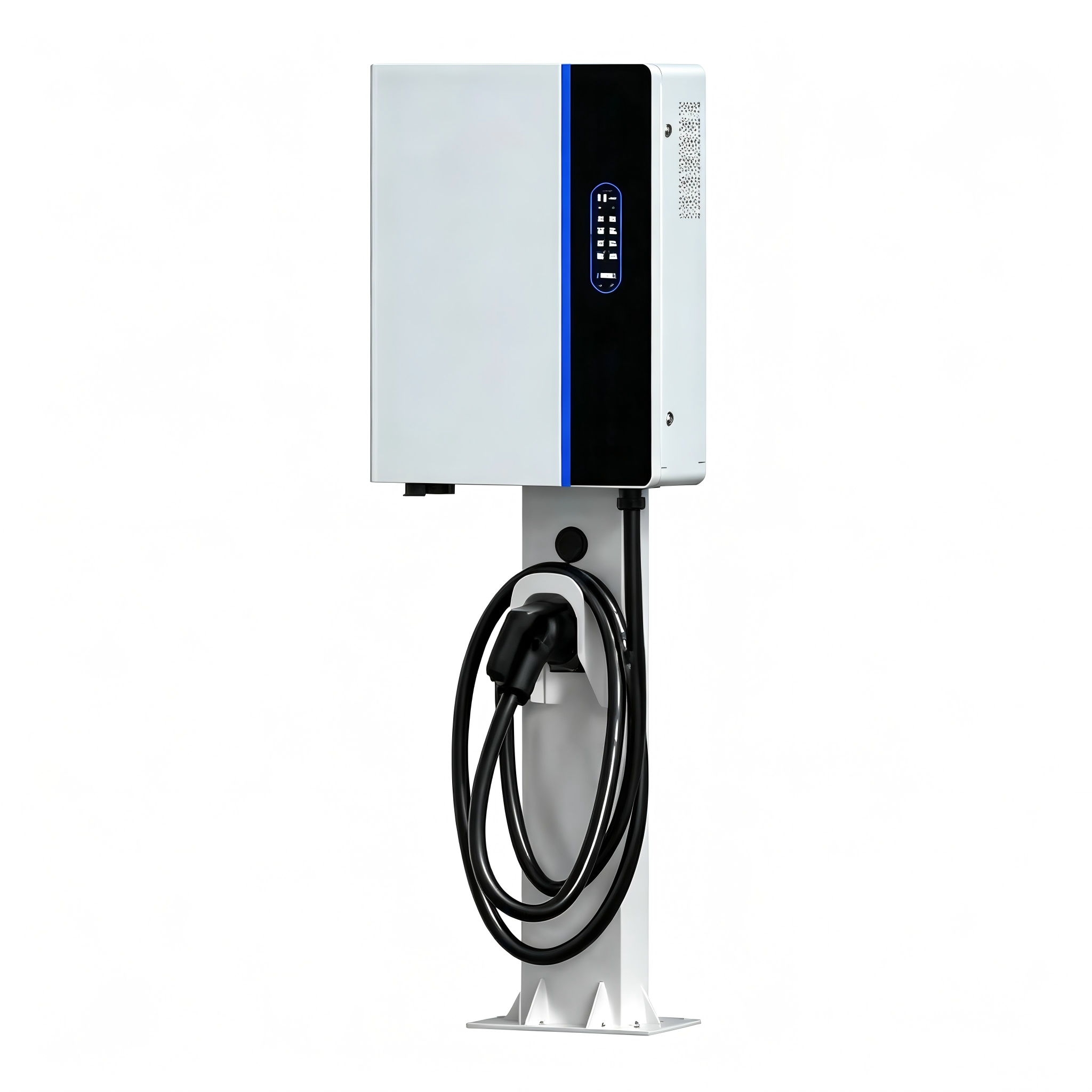
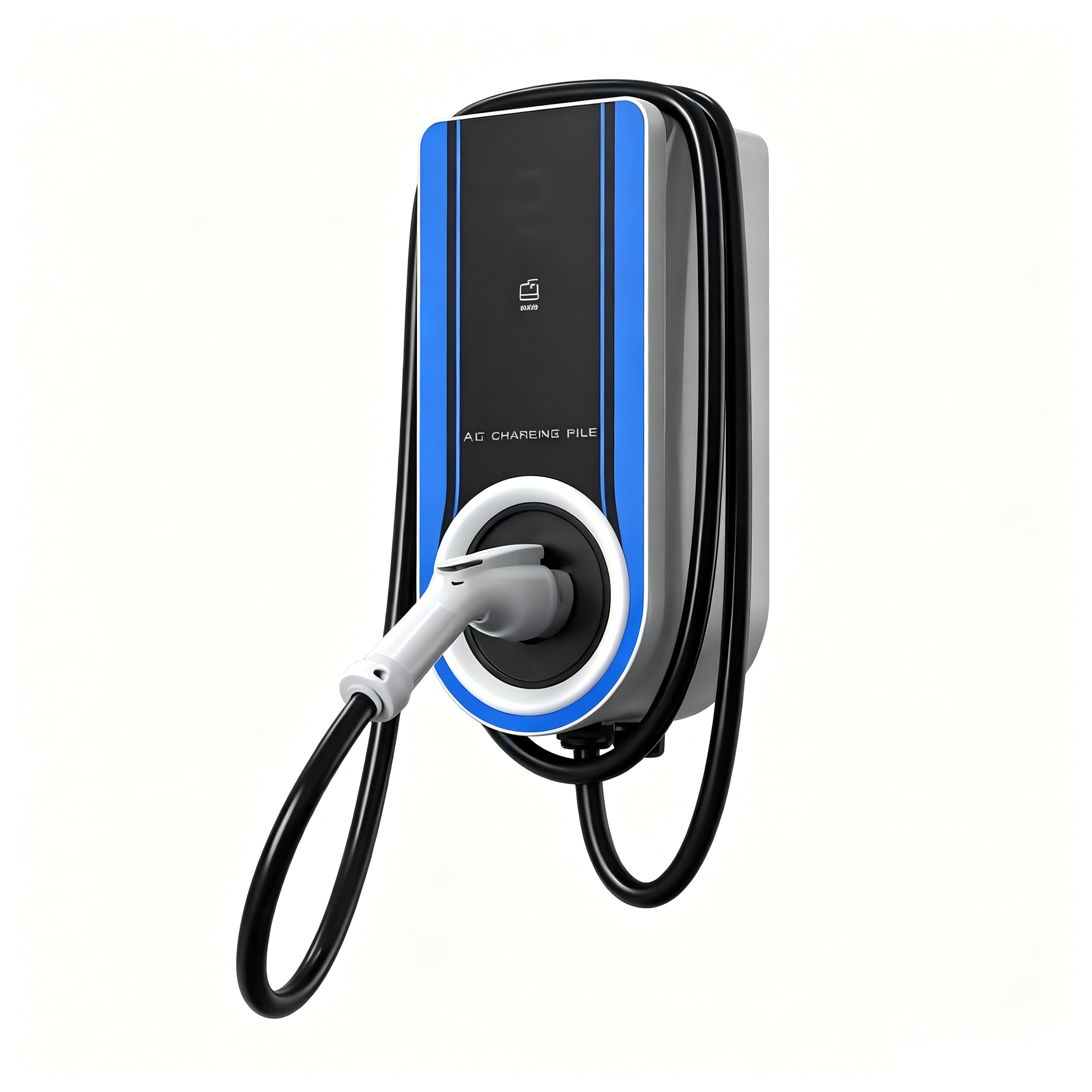
2. EV Charging Pile VS Charging Station: What’s the Difference?
While people often use these terms interchangeably, they serve different operational roles, usage methods, and application scenarios.
| Feature | EV Charging Pile | EV Charging Station |
| Scale & Nature | A single standalone unit (pedestal or wall-mounted). | A centralized facility containing multiple units and power infrastructure. |
| Usage Method | Plug-and-stay. Typically operated via a simple smartphone app scan or RFID card plug-in for long hours. | High-turnover fast charging. Driver pulls in, plugs into a high-power terminal, and waits briefly. |
| Primary Scenarios | Residential garages, corporate enterprise parks, and hotel parking lots. | Highway service areas, dedicated heavy-duty logistics hubs, and urban public stations. |
Looking for commercial-grade hardware? Explore Green Power’s full range of commercial infrastructure solutions on our Liquid-Cooled Charging Pile Product Page, featuring modular architectures designed for both standalone and centralized station setups.
3. How Do EV Charging Piles Work?
At its core, an EV charging pile safely transfers Alternating Current (AC) from the grid or Direct Current (DC) from a power cabinet into the vehicle’s battery pack, managed by smart communication protocols (like OCPP).
When accessing these networks, you will generally encounter two types of business models:
Free Charging Piles
-
Where to find them: Premium retail shopping centers, hotels, supermarkets, or corporate workplaces.
-
How they work: These are usually Destination AC chargers (7kW–22kW) where the cost of electricity is absorbed by the property owner as a marketing amenity to boost foot traffic or support workforce sustainability.
Paid Charging Stations
-
Where to find them: Public highway plazas, commercial rapid-charging hubs, and urban network hubs.
-
How they work: These leverage DC fast charging or liquid-cooled supercharging (120kW–600kW). Users pay per kilowatt-hour ($kWh$) or per minute via mobile payment integrations, credit cards, or subscription roaming networks. For ultra-high-turnover stations, operators deploy systems like the Fgreen 600kW Liquid-Cooled Charging Pile to eliminate thermal throttling and maximize peak-hour revenue.
4. Why Switch to EV Energy Security & The Green Transition
The massive push toward commercial EV infrastructure isn’t just a trend—it is a geopolitical and environmental necessity driven by three major global forces:
-
Global Energy Security: Recent geopolitical instability has proven that relying heavily on imported fossil fuels leaves economies incredibly vulnerable to oil price shocks. Electrification allows nations to diversify their energy mix using domestic power generation.
-
The Rise of Renewables (Solar-plus-Storage Synergy): Modern charging stations are evolving into microgrids. By pairing chargers with Solar PV canopies and Battery Energy Storage Systems (BESS), we can capture clean, local solar energy during the day and use it to charge EV at night, stabilizing the local utility grid.
-
Accelerating EV Adoption: With global governments mandating the phasing out of internal combustion engines (ICE), setting up robust charging networks is the only way to support the millions of new EV hitting the roads annually.
5. Home Charging Piles vs. Public Charging Stations: Which is More Cost-Effective?
A common debate among new EV drivers is whether it’s cheaper to install a private home charger or rely entirely on public networks.
The Reality Check
Charging at home using a residential tariff is currently the most cost-effective option for daily commuters, as it allows users to take advantage of low-cost, off-peak overnight electricity rates.
However, relying entirely on public networks incurs premium costs due to the high capital investment required for rapid grid infrastructure, liquid-cooling hardware, and station maintenance.
The Future:Public Charging Fees Are Inevitable
As EV adoption hits the mass market, the era of free public charging is rapidly coming to an end. Charging station operators must monetize their services to achieve a sustainable Return on Investment (ROI), pay for grid demand charges, and maintain equipment.
For site operators looking to future-proof their investment, implementing scalable infrastructure like the Fgreen Power EV Charging Matrix allows seamless integration of smart power distribution, lowering long-term operational overhead even as public charging shifts towards dynamic, time-of-use pricing models.
6. EV Charging FAQ: Top Googled Questions Answered
Q1: How long does it take to charge an EV at a public charging station?
A: It depends entirely on the charger’s power output. A standard AC destination charger (7kW–22kW) takes 4 to 8 hours for a full top-up—perfect for overnight or office stays. A high-power DC fast charging station (150kW–600kW) can power up an EV from 10% to 80% in 10 to 30 minutes.
Q2: Can any electric car use any EV charging station?
A: Generally, yes, provided the plug standard matches your region (e.g., CCS1 in North America, CCS2 in Europe, GB/T in China, and NACS globally). Most public stations feature integrated multi-protocol cables or support universal adapters.
Q3: Why do charging speeds slow down after reaching 80%?
A: To protect your vehicle’s Lithium-ion battery lifecycle. EV BMS (Battery Management Systems) intentionally reduce the incoming power rate after 80% to prevent overheating and cell degradation—much like slowing down a cup of water as it fills to the brim to prevent splashing.
Q4: Are public EV charging stations safe to use in the rain?
A: Absolutely. Commercial charging piles and stations are engineered with strict weatherproof ratings (typically IP54 or IP65) and advanced electrical ground-fault protection. No electricity flows through the cable until a secure, airtight digital handshake is established between the pile and the car.
Website:www.fgreenpv.com
Email:Info@fgreenpv.com
WhatsApp:+86 17311228539
Post time: Jul-03-2026


