




Zambia’s 300MW Solar Tender: How Distributors Profit
Zambia’s 300MW Solar + Storage Tender: A Game-Changer for Africa
In April 2026, Africa’s energy storage market achieved a milestone breakthrough – Zambia officially launched a 300MW solar+storage tender. With the massive 300MW utility-scale tender rolling out, local grids will require high-capacity stabilization. Savvy distributors are pivoting from small residential gear to Industrial BESS (Battery Energy Storage Systems) and high-efficiency Commercial Solar Inverters to supply the surging sub-contracting demand.For B2B battery energy storage distributors deeply rooted in the African market, this large-scale tender backed by the Norwegian government and supported by the World Bank not only releases a 100-billion-level market signal but also hides unprecedented development opportunities.
Global high temperatures have led to a sharp drop in annual precipitation; consequently, Zambia—which relies on hydroelectric power—has seen water levels fall to historic lows due to recurring droughts, forcing a drastic reduction in electricity generation. During peak demand periods, citizens endure prolonged power outages, sometimes lasting as long as 20 to 21 hours a day.
Due to chronic load shedding in Zambia, providing independent energy supply is key for local distributors.
Zambia’s 300MW solar+storage tender is not an ordinary energy project procurement, but a new “carbon financing + project development” model built on Article 6 of the Paris Agreement.Unlike traditional tenders, the project adopts a “Carbon Feed-In Premium” mechanism, supported by Norway’s Article 6 Climate Action Fund, which provides developers with stable additional income for at least 10 years through fixed carbon price payments. Essentially, it exchanges “future emission reduction results” for current investment, solving the pain point of difficult financing for energy storage projects in Africa.
Key Technical Requirements for Energy Storage Systems
From the perspective of the core requirements of the project, the tender has clear and specific requirements for energy storage batteries, providing distributors with a clear product selection direction.
According to the tender rules, all selected projects must be equipped with battery energy storage systems with a storage duration of no less than 30 minutes to ensure grid stability and replace coal-fired power generation; the installed capacity of a single project must be between 30MWac and 100MWac, and at least half of the power generation must be sold to Zambia Electricity Supply Corporation (ZESCO).
Combined with Zambia’s climate characteristics – daytime temperatures often reach above 35℃, and extreme high temperatures in some areas exceed 45℃ – the project puts forward extremely high requirements for the high-temperature resistance, dustproof, and protection performance of energy storage batteries.
This is also highly consistent with the trend of “high-temperature lithium iron phosphate batteries” mainly promoted by mainstream manufacturers at the 2026 Solar & Storage Live Africa.


In addition, the project also requires developers to provide complete feasibility study reports, land certificates, environmental approval documents, and investor intention certificates, highlighting the importance of compliance and professionalism.
Market Opportunities for B2B Distributors in Africa
For B2B battery energy storage distributors in Africa, the value of this tender is far more than “supply opportunities”, but also lies in the policy dividends and market radiation effects behind it.
government
First, government participation has transformed energy storage projects from “high-risk, low-return” to “low-risk, stable return”, attracting a large number of international Independent Power Producers (IPPs) and EPC enterprises to participate—and these enterprises are the core customer groups of distributors. With the strong support and guidance of the Zambian government, coupled with the policy guarantees and financial subsidies provided by international institutions such as the World Bank and the Norwegian government, the investment risks of energy storage projects have been greatly reduced, and the income return cycle has become more stable and predictable. According to industry data, among the developers participating in this tender, there are both internationally renowned IPPs and local enterprises deeply rooted in the African market. They have large demand and high requirements for energy storage batteries, and pay special attention to long-term and stable supply cooperation, which provides distributors with valuable opportunities for large-value and long-term orders.
Africa’s energy storage market
Secondly, as an energy hub in central Africa, the implementation of this project will form a demonstration effect, driving surrounding countries such as Kenya, Tanzania, and Ghana to follow up and implement similar carbon financing energy storage projects, further expanding the overall demand of Africa’s energy storage market.
How to Successfully Enter the Zambia Energy Storage Market
So, how can distributors seize this tender opportunity, successfully connect with projects, and achieve profitability? The core lies in doing a good job in “three major positioning” to accurately match market needs.
First, select products accurately to meet the core needs of the project
Combined with the tender requirements and Zambia’s market characteristics, distributors should focus on three types of energy storage products: first, high-temperature lithium iron phosphate batteries, which have high-temperature resistance above 45℃, IP54+ dustproof protection, and AI intelligent BMS battery management system, which can effectively extend battery life and reduce after-sales risks; second, containerized energy storage systems, whose modular design is convenient for transportation and installation, adapting to the rapid implementation needs of large-scale solar+storage projects; third, energy storage batteries suitable for grid frequency regulation, meeting the project’s requirement of “30-minute storage duration” and ensuring grid stability. At the same time, priority should be given to products with international certifications such as CE, IEC, and UN38.3 to ensure compliance with Zambia’s import requirements and avoid problems such as customs clearance obstacles.
Second, connect with core customers and build cooperation bridges
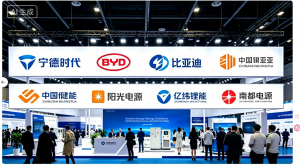
The core participants in this tender are IPPs, EPC enterprises, and public utilities such as ZESCO. Distributors should take the initiative to connect with these customers and provide integrated “product + service” solutions. On the one hand, they can rely on the resource advantages of China’s energy storage giants – BYD, CATL, Sungrow, and other enterprises have heavily invested in Africa, launched customized energy storage products for Africa, and provided distributors with stable supply, long payment terms, and localized after-sales support. Distributors can use these resources to enhance their product competitiveness and service capabilities. On the other hand, most local suppliers focus on installation and after-sales services for local communities in Africa. By partnering with internationally renowned manufacturers, these distributors are able to deliver safer, more reliable and sustainable energy storage products and services to their customers.
Third, thoroughly understand policy rules and avoid operational risks
Distributors need to deeply understand the Zambia’s project approval processes, import policies, and tariff requirements. According to the African Carbon Market Initiative (ACMI), the preliminary links of carbon projects, such as feasibility studies and Project Design Documents (PDD), require an investment of 200,000 to 1,000,000 US dollars and a cycle of 1 to 3 years. Distributors can assist customers in connecting with relevant professional institutions, provide value-added services such as policy consulting and certification handling, and enhance customer stickiness. At the same time, they need to pay attention to Zambia’s new customs clearance regulations, prepare SONCAP, CE, and other certification documents in advance, optimize logistics solutions, and choose ports with dedicated customs clearance channels such as South Africa and Kenya to reduce logistics costs and the risk of goods detention.
Capturing the Energy Storage Boom in Africa
According to the joint forecast by the African Energy Storage Industry Association (AFSIA) and the World Bank, the new installed capacity of African energy storage will reach more than 30GWh from 2025 to 2030, and the total installed capacity will exceed 50GWh by 2030, with the market size exceeding 10 billion US dollars. Among them, South Africa, Nigeria, Zambia, and Kenya are the core growth regions. With the further promotion of Article 6 of the Paris Agreement in Africa, more and more countries will launch similar carbon-financed energy storage projects, and the African energy storage market will enter a golden development period driven by policies, capital inflows, and demand outbreaks.
For B2B battery energy storage distributors in Africa, this Zambia tender is both an opportunity and a test. Only by accurately grasping policy trends, focusing on customer needs, and optimizing products and services can they seize the opportunity in the trillion-dollar blue ocean of African energy storage. In the future, as solar-storage integration becomes the mainstream direction of Africa’s energy transition, distributors also need to expand the diversified service model of “product + operation and maintenance + finance”, and use innovative models such as PayGo (pay-as-you-go) and debt restructuring to lower customer thresholds, enhance their own competitiveness, and achieve common growth with the African energy storage market. After all, in this wave of energy transition, only by following the trend and making precise layouts can we truly share the “cake” of the African energy storage market.
china whole house battery backup for solar for sale
Want to lower your sourcing costs and catch the African solar boom? Fgreen provides competitive wholesale pricing and technical support for solar distributors. Apply for a Distributor Account Now.
Website:www.fgreenpv.com
Email:Info@fgreenpv.com
WhatsApp:+86 17311228539
Post time: Apr-17-2026


