




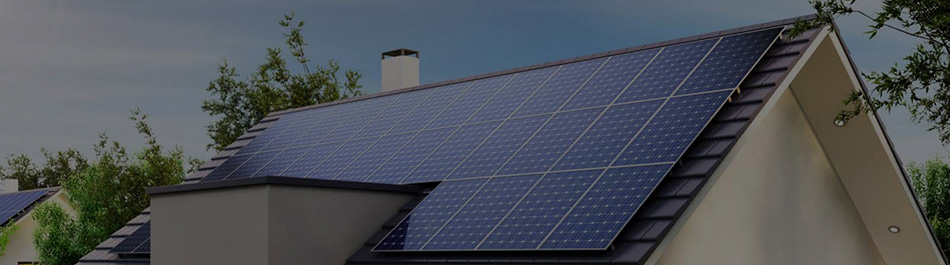
2026 sees energy storage blow up on every continent!Solar-storage hybrids are no longer just superficial eco-friendly decorations—they’re high-return core operational assets for factories, logistics warehouses, industrial parks and commercial shopping malls expanding overseas.
Falling lithium battery cell prices, AI intelligent power scheduling systems, generous global government policy incentives and aging, fragile public power grids are pushing facility owners, cross-border developers and energy investors to rush into solar storage projects in large numbers.
This blog digs into 3 explosive growth drivers of the global energy storage market, sorts out clear investment logic and risk control tips for overseas business operators, and shares actionable system matching suggestions for industrial energy sites.
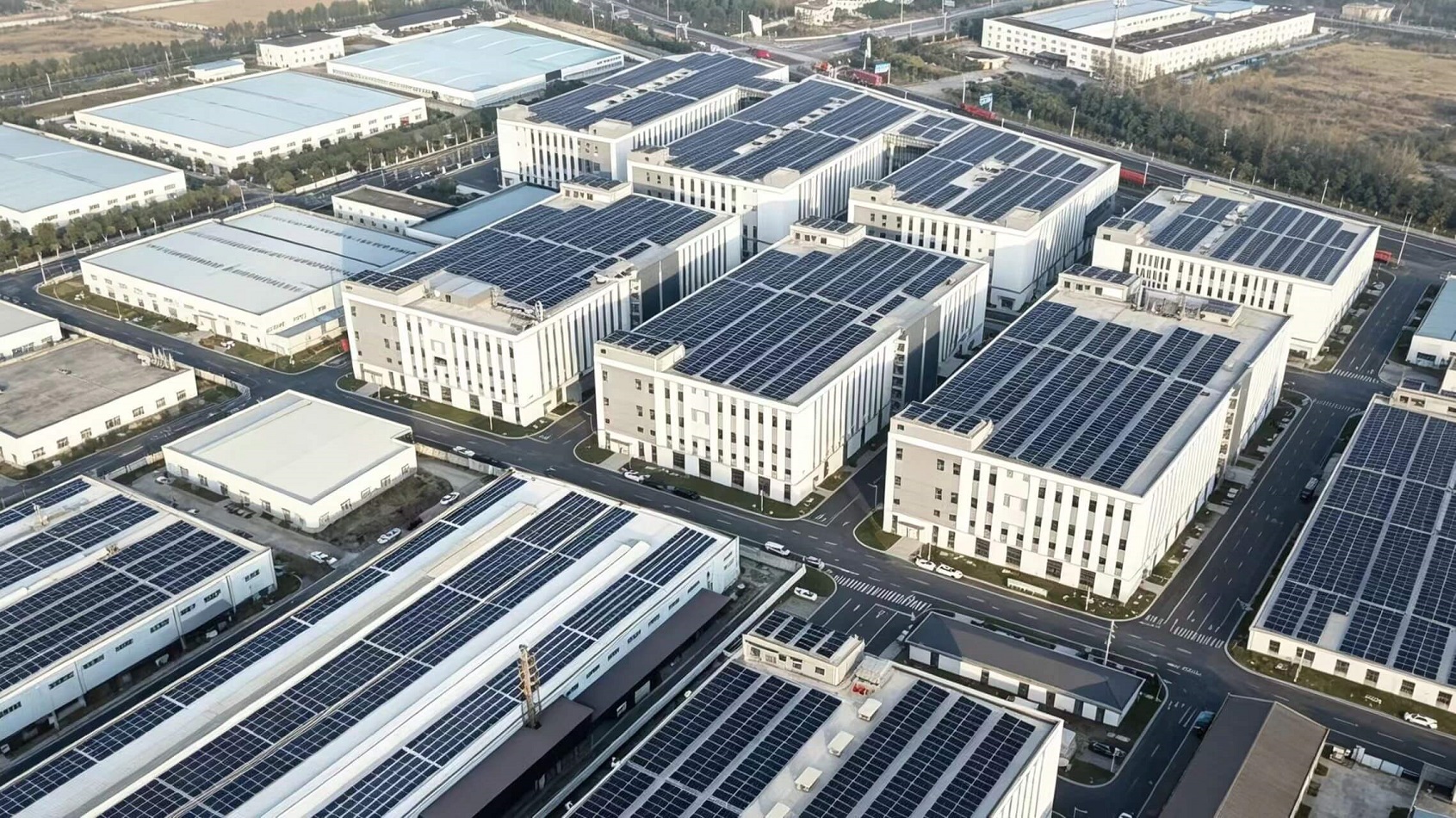
AI Dispatchable Solar Storage: How It Cuts Power Bills & Boosts ROI Fast
The core engine fueling global energy storage market growth is AI-powered dispatchable solar + battery systems. Traditional standalone solar panels only generate electricity under direct sunlight, forcing businesses to purchase expensive grid power during midday-to-evening peak demand hours.
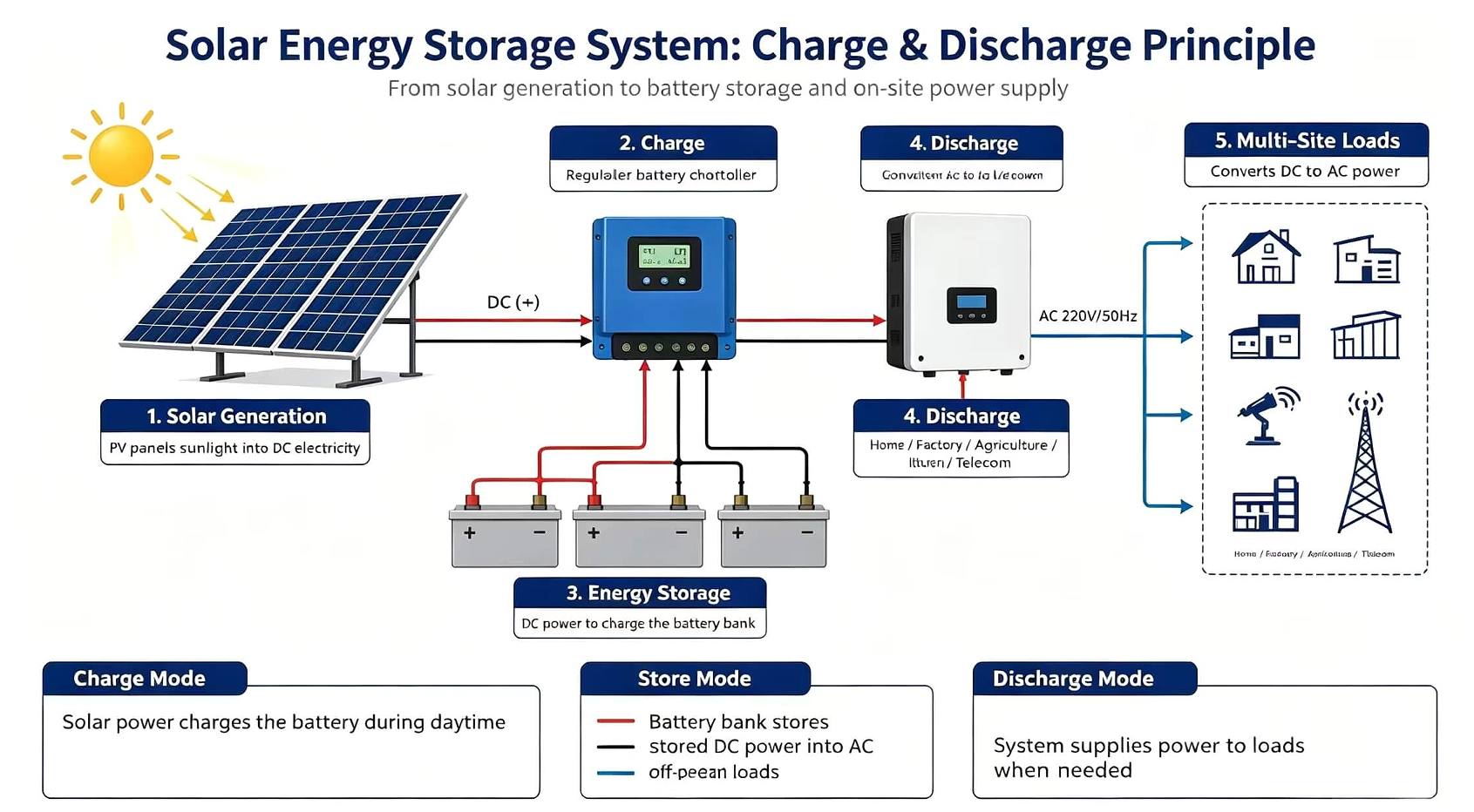
Equipped with intelligent battery energy storage systems, facilities store surplus midday solar energy and release it on demand to avoid costly peak surcharges, which account for 30%–50% of total commercial electricity bills in most key global regions such as Europe, Southeast Asia and Australia.
AI energy management systems upgrade profitability to a new level. Unlike outdated rigid fixed charge-discharge schedules, modern machine learning tools automatically predict factory load curves, daily solar output and local tiered electricity tariff rules.
Batteries will intelligently shave power spikes, shift discharge to high-price time windows and fully charge during ultra-low-cost or negative grid tariff periods without any manual operation.
The system continuously optimizes its operation logic long after installation, delivering bigger monthly cost savings as it learns the facility’s unique energy consumption habits.
On top of direct utility bill cuts, storage assets unlock stable secondary revenue streams: owners can participate in regional demand response and virtual power plant (VPP) programs to sell spare battery capacity to local grid operators during power shortages.
Combined with continuously declining LFP cell costs and stacked government subsidies across major economies, project payback cycles shrink sharply, making global energy storage investment far more lucrative than previous years.
For operators seeking factory rooftop energy solutions tailored to unique load and consumption characteristics, comprehensive solar-storage hybrid configurations are widely adopted across global industrial sites.
Grid Outage Risks: Why Resilience Is Now A Non-Negotiable Storage Must-Have
Cost savings used to be the top selling point for storage, yet grid resilience has become the No.1 purchase driver of regional C&I storage buyers in 2026.
Aging power infrastructure, frequent extreme weather disasters and unstable local power supply trigger frequent unplanned blackouts across Southeast Asia, Latin America, Africa and parts of Eastern Europe.
For manufacturing plants, cold chain storage bases and data centers, even a few hours of unplanned shutdown will lead to devastating tangible losses: wasted raw materials, suspended continuous production lines, delayed client orders and damaged temperature-sensitive goods.
On-site energy storageacts as reliable independent backup power, keeping core production lines, low-temperature refrigeration, site security and life-safety systems running stably through unexpected outages.
For multi-shift heavy factories equipped with high-power heavy machinery, the loss prevention value brought by stable power supply often outweighs all direct electricity cost savings from peak shaving.
As local and multinational enterprises speed up global factory layout and industrial park construction, solar-storage hybrid systems gradually replace high-emission, high-maintenance and costly diesel generators, creating rocketing global energy storage demand year over year.
Most complete hybrid systems on the market pair energy storage with high-efficiency photovoltaic modules to maximize on-site solar self-consumption and lift overall project income.
Unified Global Certifications: What Removes International Storage Deployment Barriers
In past years, scattered, mismatched regional safety and compliance rules stood as one of the biggest obstacles blocking global energy storage industry expansion.
However, universally recognized international certification frameworks, which have gained full industry traction in 2026, fully resolve these global compliance headaches for solar-storage hybrid projects.
Any international industrial energy storage deployment needs to meet four essential global standards to steer clear of costly risks like cargo detention at customs, delayed site construction and dangerous battery thermal runaway incidents:
- IEC62619: The core global safety benchmark for stationary industrial lithium storage batteries, engineered to sustain stable operation under volatile, high-power AI-driven load fluctuations
- UN38.3: A non-negotiable global transport certification mandatory for all lithium battery shipments sent via sea or land international logistics routes
- IEC61000: Electromagnetic compatibility standard that shields delicate precision manufacturing machinery from signal interference generated by large-scale battery systems
- UL / CB / BIS: Respective region-recognized authoritative credentials for market access in North America, the European Union and India
Trusted, market-ready energy storage hardware is required to hold full official test documentation proving compliance with all four sets of standards.
Factory-pre-certified all-in-one solar+BESS integrated packages deliver tangible advantages to EPC contractors and institutional investors: they drastically shorten international project review timelines, reduce annual enterprise insurance costs and minimize long-term operational safety hazards.
Customized capacity sizing frameworks match storage hardware to varied business operation modes: small retail and office spaces rely on basic peak shaving and short emergency backup, mid-sized logistics warehouses prioritize boosting on-site solar self-consumption rates, while heavy manufacturing facilities deploy high-power battery modules to buffer sudden power spikes from heavy production machinery.
Supported by standardized modular hardware design, multi-region cross-border investors can replicate mature project schemes with predictable costs and steady operating performance, making versatile, fully certified all-in-one solar-storage integrated equipment the mainstream pick for global cross-border industrial energy projects.
Frequently Asked Questions
Q: What core benefits do solar + storage systems bring for global factories?
A: AI-powered charge and discharge management effectively cuts costly peak electricity charges. Battery storage delivers dependable backup power to avoid heavy financial losses brought by unexpected blackouts. Besides, enterprises are able to obtain stable long-term extra revenue by participating in VPP and demand response initiatives.
Q: Why has power resilience become a top priority for global factories in 2026?
A: Aging power infrastructure and frequent extreme weather lead to unplanned power outages around the world. Solar-storage systems supply zero-carbon standby power, protecting factories against production suspension and loss of temperature-sensitive commodities. This explains why power reliability turns into a critical consideration alongside cost savings for industrial operators.
Q: How do international certifications ease globaenergy storage project deployment?
A: Worldwide standards including IEC62619 and UN38.3 harmonize global safety requirements. They remove fragmented regional compliance obstacles and accelerate customs clearance and local grid connection approval for international projects. Standardized certification frameworks greatly reduce the uncertainty for global investors.
Q: What is the most suitable energy storage solution for global industrial projects?
A:Fully certified integrated solar-storage hybrid systems can adapt to diverse load requirements of different factories. This form of solution owns extensive practical operation experience across Europe, Southeast Asia and Latin America, and supports flexible capacity configuration for retail spaces, warehouses and manufacturing plants.
Q: Does the hybrid solar-storage system require complex daily operation and maintenance?
A: Modern AI energy management systems work autonomously with minimal human operation. Routine management merely consists of simple periodic checks on batteries and photovoltaic modules. Automatic operational optimization helps enterprises keep long-term maintenance expenses under control.
Storage Becomes Standard Global Industrial Infrastructure
The three major growth forces covered above jointly push the global solar and storage industry into a mature development stage in 2026. As more enterprises expand globally, dispatchable hybrid energy systems will evolve from an optional upgrade to standard supporting infrastructure for industrial parks and factories.
For global factory operators, energy developers and institutional investors, certified integrated photovoltaic and storage complete sets balance energy cost control, production risk prevention and additional grid service revenue. Readers can browse the embedded links in this article to check detailed equipment parameters and real global industrial project cases for further reference.
-
Website:www.fgreenpv.com
Email:Info@fgreenpv.com
WhatsApp:+86 17311228539
Post time: Jul-31-2026


