




For many smallholder farmers in Africa, reliable access to water and electricity is essential for productive agriculture. Farms that depend mainly on rainfall can be vulnerable to dry periods, while irrigation systems powered by diesel generators or an unreliable electricity grid can be difficult and expensive to operate.
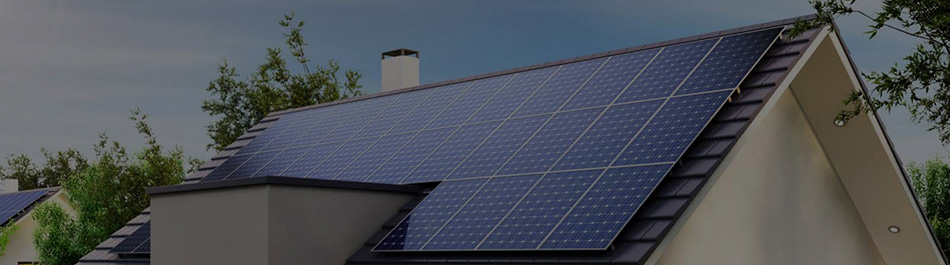
Solar energy offers another approach. By combining photovoltaic (PV) generation with efficient irrigation equipment and, where appropriate, battery storage, electricity can be generated closer to where water is needed. This can make irrigation more practical for farms located far from reliable grid infrastructure.
According to the Food and Agriculture Organization of the United Nations (FAO),solar-powered irrigation is becoming increasingly relevant in rural and energy-constrained areas, where diesel fuel can be expensive and dependable grid electricity may not be available.
Solar Generation
Generate electricity close to remote agricultural loads.
Water Pumping
Use solar electricity to power agricultural water pumps.
Battery Storage
Store surplus solar energy for later irrigation demand.
Smart Irrigation
Coordinate water delivery with crop and environmental needs.
Why Irrigation Is a Challenge for Smallholder Farmers
Irrigation requires more than access to a source of water. Farmers also need a reliable way to move water from wells, rivers, lakes, reservoirs, or other sources to their fields.
In remote agricultural areas, extending the electricity grid may be difficult or uneconomical. Diesel-powered pumps can provide an alternative, but they depend on a continuous supply of fuel and require regular maintenance.
This becomes especially important during dry periods. A farm may have access to sufficient water underground or from a nearby surface source, but without an affordable and reliable energy source, that water cannot easily be delivered to crops.
The World Bank's experience with solar irrigation in Niger provides a practical example. Solar-powered pumps helped farmers expand irrigated areas and diversify crops while reducing their dependence on diesel-powered pumping.
Common Energy Challenges
Remote farms may be far from reliable electricity infrastructure.
Diesel pumps require recurring fuel supply and maintenance.
Irrigation demand can increase when rainfall becomes unreliable.
How Solar Energy Supports Agricultural Irrigation
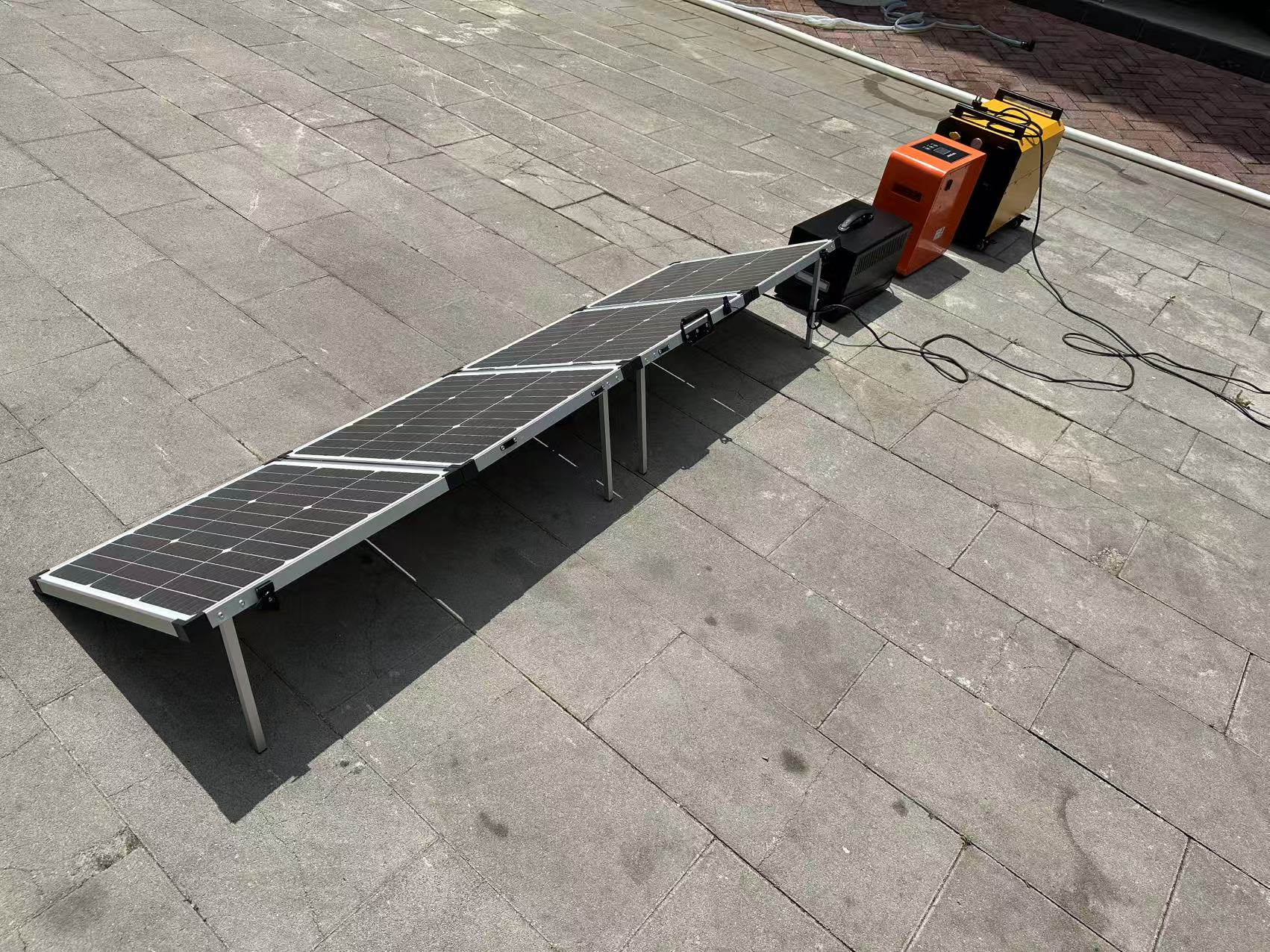
A solar irrigation system converts sunlight into electricity that can be used to operate a water pump. A typical system may include:
- Solar photovoltaic panels
- A solar inverter, controller, or pump controller
- An agricultural water pump
- Battery storage when energy is required outside solar-generation hours
- A control system for managing irrigation schedules
During periods of strong solar generation, PV electricity can directly support pumping. When a battery is included, surplus electricity can also be stored for later use.
GREEN POWER's Smart Agricultural Irrigation solution combines photovoltaic generation, energy storage, water pumping, and intelligent control. According to the company's solution description, irrigation timing and water volume can be adjusted according to factors such as soil moisture, weather conditions, and crop water requirements.
How a Solar Irrigation System Works
1. Generate
PV panels convert sunlight into electricity.
2. Convert
Controllers or inverters manage electrical power.
3. Pump
Electricity powers the agricultural water pump.
4. Store
Surplus energy can be stored for later use.
Why Solar Irrigation Can Be Suitable for Remote Farms
One of the main advantages of solar-powered irrigation is that electricity can be generated at the point of use. A remote farm does not necessarily need to wait for a conventional grid connection before adopting an irrigation system.
This can be particularly useful in rural areas where electricity infrastructure is limited. Solar generation can provide daytime electricity for pumping, while battery storage can provide additional flexibility when water must be pumped outside peak solar-production hours.
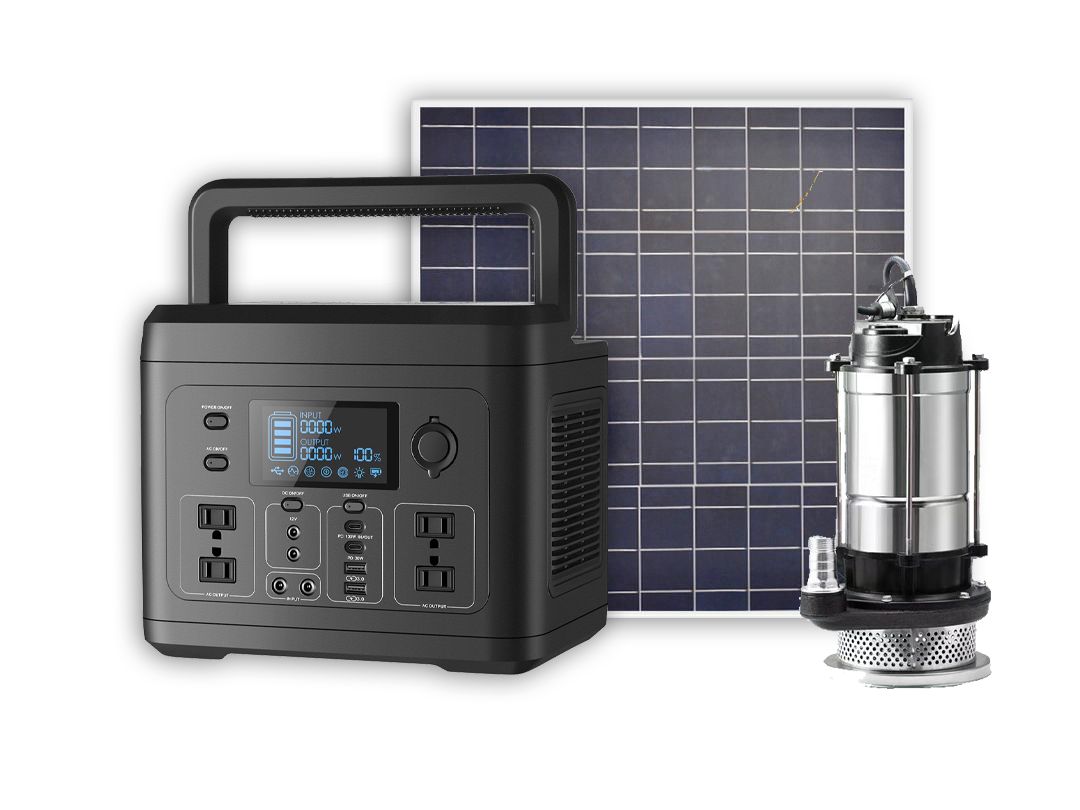
The GREEN POWER Solar Water Pump is designed for agricultural irrigation, livestock watering, farm use, and remote off-grid applications where conventional electricity or fuel supplies may be difficult to access.
Solar generation can support irrigation in locations with limited grid infrastructure.
Solar pumping can reduce reliance on continuous diesel fuel deliveries.
Solar, pumping, storage, and control equipment can be configured according to project requirements.
Key Factors for a Solar Irrigation Project
Solar irrigation should be designed around the actual requirements of the farm. Important factors include:
Well depth, river or reservoir location, and pumping distance affect the required energy.
Flow rate, head, motor power, voltage, and operating schedule must be considered.
Local solar conditions determine how much electricity the PV system can generate.
Daytime pumping has different storage requirements from evening or nighttime irrigation.
Storage may be useful where irrigation demand continues when solar generation is limited.
Solar Irrigation vs. Diesel-Powered Pumping
Solar and diesel systems can both provide energy for agricultural water pumping, but their operating models are different.
| Consideration | Solar Irrigation | Diesel Pumping |
|---|---|---|
| Primary energy source | Solar energy | Diesel fuel |
| Fuel requirement | No continuous fuel supply required | Continuous fuel supply required |
| Remote operation | Well suited to off-grid locations | Possible where fuel can be delivered |
| Noise and local emissions | No combustion at the point of use | Combustion emissions and engine noise |
| Energy cost structure | Higher upfront equipment cost, low solar fuel cost | Recurring fuel and maintenance costs |
The right choice depends on the project's location, financing, water requirements, equipment costs, maintenance capability, and energy demand. Solar does not automatically provide the lowest total cost in every situation, but it can be particularly attractive where diesel fuel is expensive or electricity infrastructure is limited.
The Role of Battery Storage in Solar Irrigation
Solar generation and irrigation demand do not always occur at the same time.
A farm may generate the most solar electricity around midday while requiring additional irrigation in the early morning, late afternoon, or evening. Battery storage can help separate energy generation from energy use.
A solar-plus-storage irrigation system can work as follows:
Solar Generation
Solar PV generates electricity during daylight hours.
Direct Pumping
Solar power supplies the irrigation load when available.
Energy Storage
Surplus electricity can charge the battery.
Later Use
Stored electricity can later support irrigation or other farm loads.
The required battery size depends on the pump power, operating hours, solar production, usable battery capacity, system efficiency, and desired reserve level. Battery capacity should therefore be calculated from the real load profile rather than selected as a generic package.
Smart Controls Can Improve Irrigation Management
Energy is only one part of an efficient agricultural irrigation system. Water management is equally important.
Smart irrigation control can use information such as soil moisture, weather conditions, and crop water requirements to help determine when irrigation should occur and how much water should be delivered.
FAO notes that irrigation decision-support tools can help optimize irrigation scheduling and water allocation so that water is applied in the right amounts at the right time. The same principle can be applied when integrating smart controls with solar energy and pumping systems.
For agricultural projects, the goal is not simply to maximize the amount of water pumped. The objective is to coordinate energy use and water delivery with actual crop requirements.
Examples of Solar Irrigation in Africa
Solar-powered irrigation is already being applied in several African agricultural projects.
In Niger, the World Bank has documented the use of solar-powered pumps to support irrigation and improve farmers' ability to cultivate additional crops during dry periods.
In Togo, an African Development Bank-financed rural electrification project
deployed solar pumps to farms as part of a broader effort to expand access to solar energy in rural areas.
These examples show that solar irrigation is not limited to a single farm model. The appropriate configuration depends on the water source, irrigation method, farm scale, solar conditions, and local energy infrastructure.
What Smallholder Farmers Should Consider Before Installation
Before investing in a solar irrigation system, farmers and project developers should establish the actual irrigation and energy requirements.
Measure Water Requirement
Determine the required irrigation volume, operating schedule, crop type, and seasonal demand.
Check Pumping Conditions
Identify the water source, pumping depth, required pressure, flow rate, and distance between the source and irrigation area.
Determine Electrical Load
Record the pump motor's rated power and, where applicable, starting characteristics.
Evaluate Solar & Storage
Estimate available solar production and determine whether battery storage is required.
Plan Maintenance
Consider spare parts, system monitoring, service capability, and user training.
Building More Resilient Agricultural Power Systems
Solar energy cannot solve every agricultural challenge, but it can address one important constraint: access to reliable electricity for water pumping.
For smallholder farmers, combining solar generation with efficient pumps, battery storage, and smart irrigation controls can create a more flexible energy and water-management system.
The most effective solution is one designed around the farm's actual needs rather than a standard equipment package. Water source, crop requirements, pump characteristics, solar resource, storage needs, and local environmental conditions all need to be evaluated together.
Key Takeaway
A well-designed solar irrigation system can combine PV generation, efficient water pumping, battery storage, and smart controls to provide a more flexible energy solution for remote agricultural applications.
Conclusion
Solar energy can provide a practical electricity source for agricultural irrigation in areas where grid access is limited or unreliable. For smallholder farmers in Africa, solar-powered pumping can bring electricity closer to the point of water use while reducing dependence on continuous fuel deliveries.
Battery storage can add further flexibility by allowing solar-generated electricity to be used beyond the exact period when PV production is available. Smart irrigation control can also help align water delivery with crop and environmental requirements.
For projects evaluating integrated agricultural energy systems, explore GREEN POWER's Smart Agricultural Irrigation solution and Solar Water Pump for more information about solar-powered agricultural applications.
Explore Solar Irrigation Solutions
GREEN POWER provides integrated solutions combining solar generation, energy storage, water pumping, and intelligent irrigation control for agricultural and off-grid applications.
Post time: May-12-2025


