




Portable Outdoor Lithium Energy Storage:Power Supply for Camping Emergency
In our daily lives, we rely heavily on electronic devices such as smartphones, PCs, and cameras. However, when engaging in outdoor activities or facing power outages, these devices’ batteries often run out quickly, impacting our overall experience.
To address this issue, outdoor power supplies were developed. While traditional options like fuel generators, lead-acid batteries, and solar panels exist, portable lithium outdoor power supplies have rapidly become the industry standard.
Technical Comparison: Why Lithium Defeats Traditional Power Supplies
To understand why the market is shifting toward lithium, it is helpful to look at how it compares to traditional options:
| Power Supply Type | Portability | Eco-Friendliness | Noise Level | Key Disadvantages |
| Fuel Generators | Heavy & Bulky | Low (Emissions) | High Noise | Contradicts eco-friendly concepts |
| Lead-Acid Batteries | Heavy & Large | Low (Pollution) | Silent | High environmental pollution |
| Solar Panels Only | Lightweight | High (Green) | Silent | Cannot store energy independently |
| Portable Lithium Power | Lightweight & Compact | High (Eco-Friendly) | Silent | Higher initial cost (now rapidly decreasing) |
Compared to traditional diesel generators and lead-acid batteries, portable lithium storage power supplies are lightweight, easy to use, low-noise, and high-capacity. As raw material prices gradually decrease, portable energy storage has become irreplaceable.

Market Demand Analysis: US vs. Japan vs. Europe
As of 2025, the global market for portable lithium energy storage has evolved significantly. While North America remains the largest single market, the Asia-Pacific (APAC) region as a whole has overtaken Japan to become the second-largest demand hub, with Europe following closely as the third. Below is an updated analysis of the three key regional markets:
1. The US Market: Still the Largest, Driven by Outdoor & Backup Culture
The United States remains the world’s largest market for portable energy storage, accounting for approximately 40–50% of global sales. This leadership is sustained by two deeply rooted habits: outdoor recreation (camping, RV, overlanding) and frequent emergency backup needs due to grid instability in extreme weather events (hurricanes, wildfires, winter storms).
Key trends in the US market (2025):
Capacity shift: High-capacity units (>1000Wh) are growing the fastest, as users power more household appliances outdoors.
Brand competition: Chinese brands (EcoFlow, Jackery, Bluetti) compete fiercely with local players like Goal Zero.
Channel preference: Amazon, Walmart, and specialized outdoor retailers are dominant sales channels.
2. The Japanese Market: Disaster Preparedness Remains the Core, But Global Ranking Has Shifted
Japan is still a significant market, but it is no longer the world’s second largest. As of 2025, the broader Asia-Pacific (APAC) region—driven by explosive growth in China, Southeast Asia, and India—has taken the second spot. Japan now ranks as an important but smaller segment within APAC, with its market share estimated at around 8–10% of global demand.
The core demand driver in Japan remains unchanged: disaster prevention. Due to frequent earthquakes and typhoons, Japanese households prioritize emergency backup power. However, the market is relatively mature and growth is slower compared to emerging APAC economies. Products in the 500–1000Wh range with UPS functionality are particularly popular.
3. The European Market: Green Transition & Energy Security Drive Stable Growth
Europe remains the third-largest market globally, accounting for roughly 18% of worldwide demand. The regional drivers are a combination of outdoor activities (camping in Scandinavia, Alps) and a strong push for renewable energy backup.
What sets Europe apart in 2025 is the high willingness to adopt solar-ready power stations. European consumers, especially in Germany, France, and the UK, are highly conscious of carbon footprints. Portable power supplies with integrated or compatible solar panels are experiencing above-average growth. Additionally, volatile energy prices have made home emergency backup a more common consideration for middle-class households.

Main Capacity Ranges and Application Scenarios
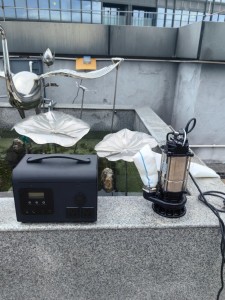
Currently, the industry’s product capacity is mainly divided into three distinct ranges to fit various needs:
- 100Wh – 500Wh: Ideal for short trips, hiking, and charging conventional electronic products like phones and laptops.
- 500Wh – 1000Wh: Perfectly suited for camping, outdoor filming, and powering small electronic appliances.
- Over 1000Wh: Heavy-duty power for medical rescue operations, professional outdoor engineering, ranching, and household emergency backup.
Equipped with a variety of interfaces—including AC, DC, Type-C, USB, and PD—these power supplies ensure seamless compatibility with all mainstream devices on the market. Furthermore, when combined with solar photovoltaic panels, they incorporate electricity generation and storage into one highly efficient unit.
Future Trends: Accelerating the Replacement of Small Generators
The development of the new energy vehicle industry has significantly improved the energy storage efficiency of lithium batteries while rapidly lowering manufacturing costs. Driven by the green economy, portable energy storage devices have officially been recognized as the ultimate replacement for small fuel generators. Global shipments are maintaining a high compound annual growth rate (CAGR), filling a critical gap in the portable energy storage field.
Partner with a Trusted Green Energy Supplier
Looking for reliable, high-capacity portable lithium energy storage solutions for your market? We specialize in advanced battery manufacturing and renewable energy products.
[Click Here to Browse Our Latest Portable Power Station Catalog] or [Contact Us Today] for wholesale pricing and OEM/ODM specifications!
Post time: May-27-2026


