




Quick Answer
To choose the right energy storage system for a solar project, first determine how much energy the project needs and how much power it requires. Then evaluate backup duration, PV capacity, system type, safety requirements, and scalability.
The basic rule is: match battery capacity in kWh to energy demand and match inverter power in kW to the loads that must operate simultaneously.
What Should You Consider When Choosing an Energy Storage System?
For installers, distributors, EPC companies, and energy solution providers, six factors should be assessed before selecting a solar energy storage system.
Energy Demand
Determine how much energy the project needs to store and deliver. Battery capacity is measured in kWh.
Backup Duration
Determine how many hours the battery needs to support the required loads when solar or grid power is unavailable.
Inverter Power
The inverter must provide enough kW to operate the connected loads, especially high-power equipment.
Solar PV Capacity
Check whether the battery and inverter can handle the planned PV input and charging requirements.
Application
Residential backup, small solar projects, and commercial applications have different system requirements.
Future Expansion
For projects expected to grow, modular and scalable systems can simplify future capacity expansion.
How Do You Calculate the Required Battery Capacity?
A practical starting point is to estimate how much energy the battery needs to deliver during the required backup period.
Battery Capacity Formula
Required Battery Capacity ≈ Load (kW) × Backup Time (hours) ÷ (DoD × System Efficiency)
For example, a project with a 5 kW average load requiring 4 hours of backup has a theoretical energy requirement of 20 kWh before accounting for depth of discharge and system losses. The actual battery size should therefore be higher than 20 kWh.
This calculation is a starting point rather than a complete system design. Peak loads, load profiles, PV generation, battery operating limits, temperature, and the required operating strategy should also be considered.
What Is the Difference Between Battery Capacity and Inverter Power?
Battery Capacity — kWh
kWh indicates how much energy the battery can store. A larger battery can generally provide longer backup time when the load remains unchanged.
Inverter Power — kW
kW indicates how much power the system can supply at a given moment. It determines whether the system can operate the required loads.
Important: A large battery does not automatically mean a high-power system. A project needs both sufficient battery capacity and sufficient inverter power.
How Do You Select the Right Energy Storage System?
A simple decision process can help B2B buyers identify the appropriate system before requesting a quotation.
Which Energy Storage System Fits Your Project?
GreenPower offers different energy storage configurations for different project scales. These examples can help B2B buyers understand how system capacity and power relate to project requirements.
3kWh / 3kW All-in-One
Consider it for: smaller storage and backup applications where an integrated battery and inverter solution is preferred.
- 3.07 kWh LiFePO4 battery
- 3 kW inverter
- Stackable design
- Up to 5000 cycles
15kWh / 5kW All-in-One
Consider it for: projects requiring higher stored energy or longer backup in an integrated configuration.
- 15 kWh battery
- 5 kW inverter
- LiFePO4 battery technology
- Expandable architecture
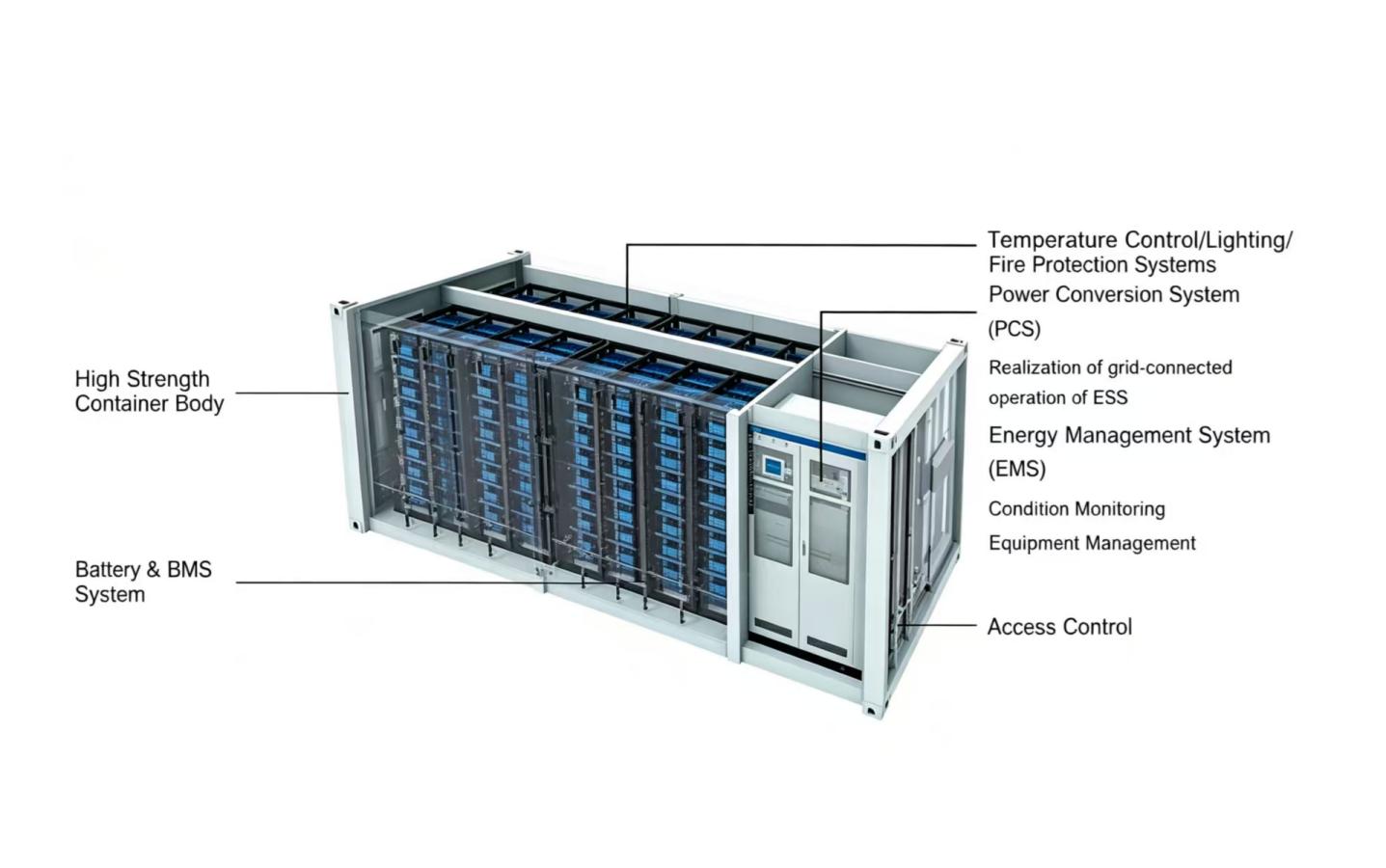
1000kWh Commercial ESS
Consider it for: larger commercial and industrial projects requiring high-capacity storage and integrated energy management.
- 1000 kWh capacity
- Integrated BMS, EMS and PCS
- Temperature control and fire protection
- Local and remote monitoring
Note: These product examples should not be treated as fixed application limits. The final configuration should be determined from the project’s load profile, PV capacity, backup requirement, inverter power, and expansion plan.
How Should B2B Buyers Compare Energy Storage Systems?
| Project Requirement | Possible System Direction | Key Selection Factor |
|---|---|---|
| Smaller backup or storage project | Compact All-in-One ESS | Installation simplicity and integrated design |
| Higher energy demand or longer backup | Higher-capacity All-in-One ESS | Battery capacity and inverter power |
| Factory or commercial building | Commercial & Industrial ESS | Capacity, EMS, safety and scalability |
| Project expected to expand | Modular / scalable ESS | Expansion architecture and compatibility |
All-in-One or Commercial Energy Storage System?
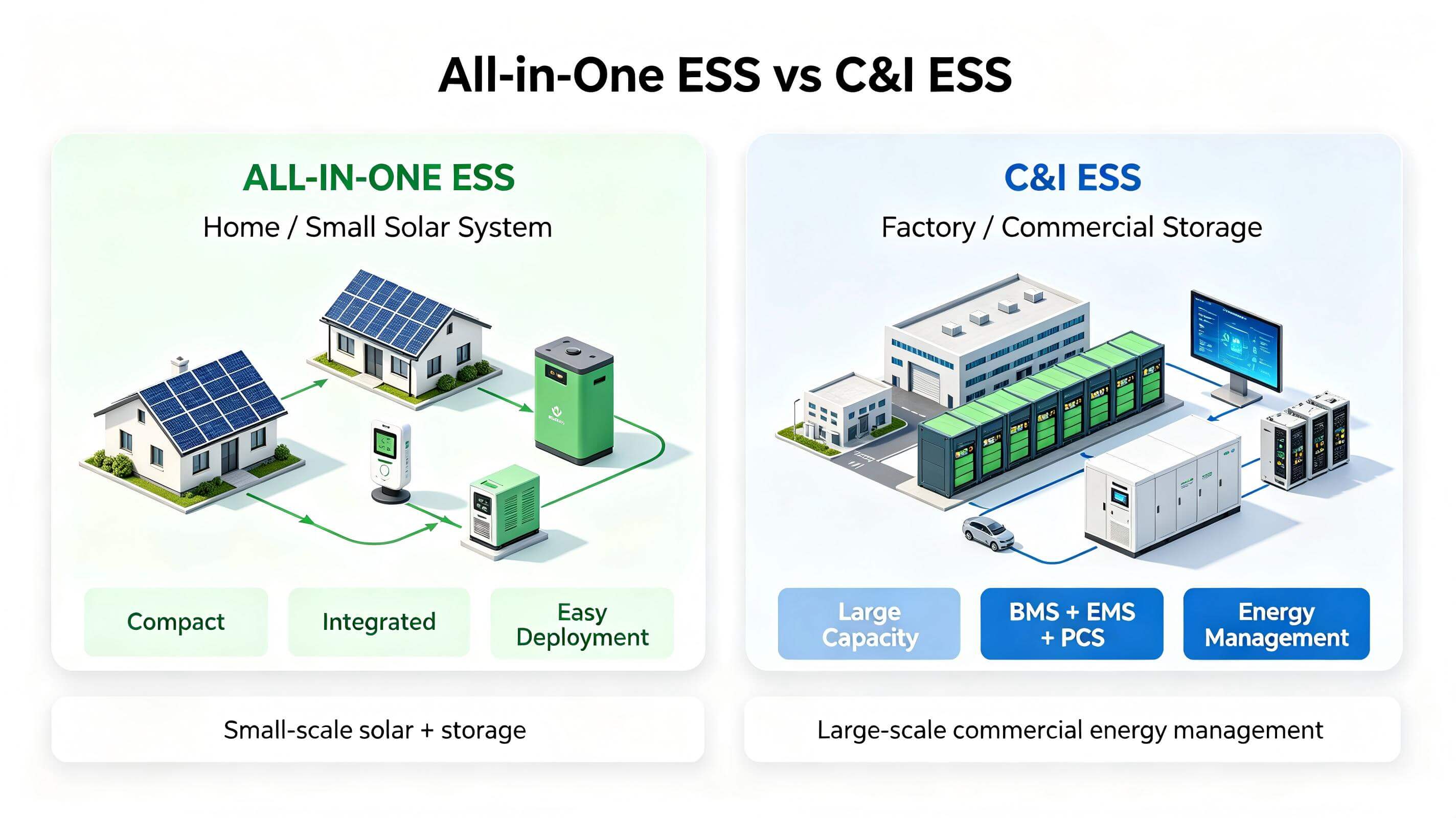
All-in-One Energy Storage
An All-in-One system integrates major components such as the battery and inverter into a compact solution. It can simplify system design, installation, and deployment.
Consider it when: compact design, integrated architecture, simple installation, and modular expansion are important.
Commercial & Industrial ESS
C&I systems are designed for larger energy requirements and may integrate PCS, BMS, EMS, thermal management, fire protection, and monitoring.
Consider it when: the project involves factories, commercial buildings, EV charging, peak shaving, or larger-scale energy management.
What Should Installers Check Before Buying?
System Compatibility
Check battery voltage, inverter specifications, PV input, communication interfaces, and system compatibility.
Safety
Review battery chemistry, BMS functions, protection mechanisms, thermal management, and applicable certifications.
Scalability
Confirm whether additional battery modules or systems can be added as project requirements increase.
Documentation
Request datasheets, manuals, certifications, test reports, and transportation documentation before purchasing.
Customization
For B2B projects, OEM, communication, appearance, capacity, and configuration may need to be customized.
After-Sales Support
Evaluate technical support, troubleshooting procedures, spare parts, monitoring, and remote support.
What Certifications Should You Check?
Certification requirements depend on the destination market, application, and system configuration. B2B buyers should confirm which standards apply to the complete system and its individual components.
Before Placing an Order, Ask the Supplier For:
- Applicable battery and system certifications
- Safety and transportation documentation
- Relevant test reports
- Product datasheets and installation manuals
- Country-specific compliance information
For more information, see our Solar Battery Certifications Guide.
How Do You Choose an Energy Storage Supplier?
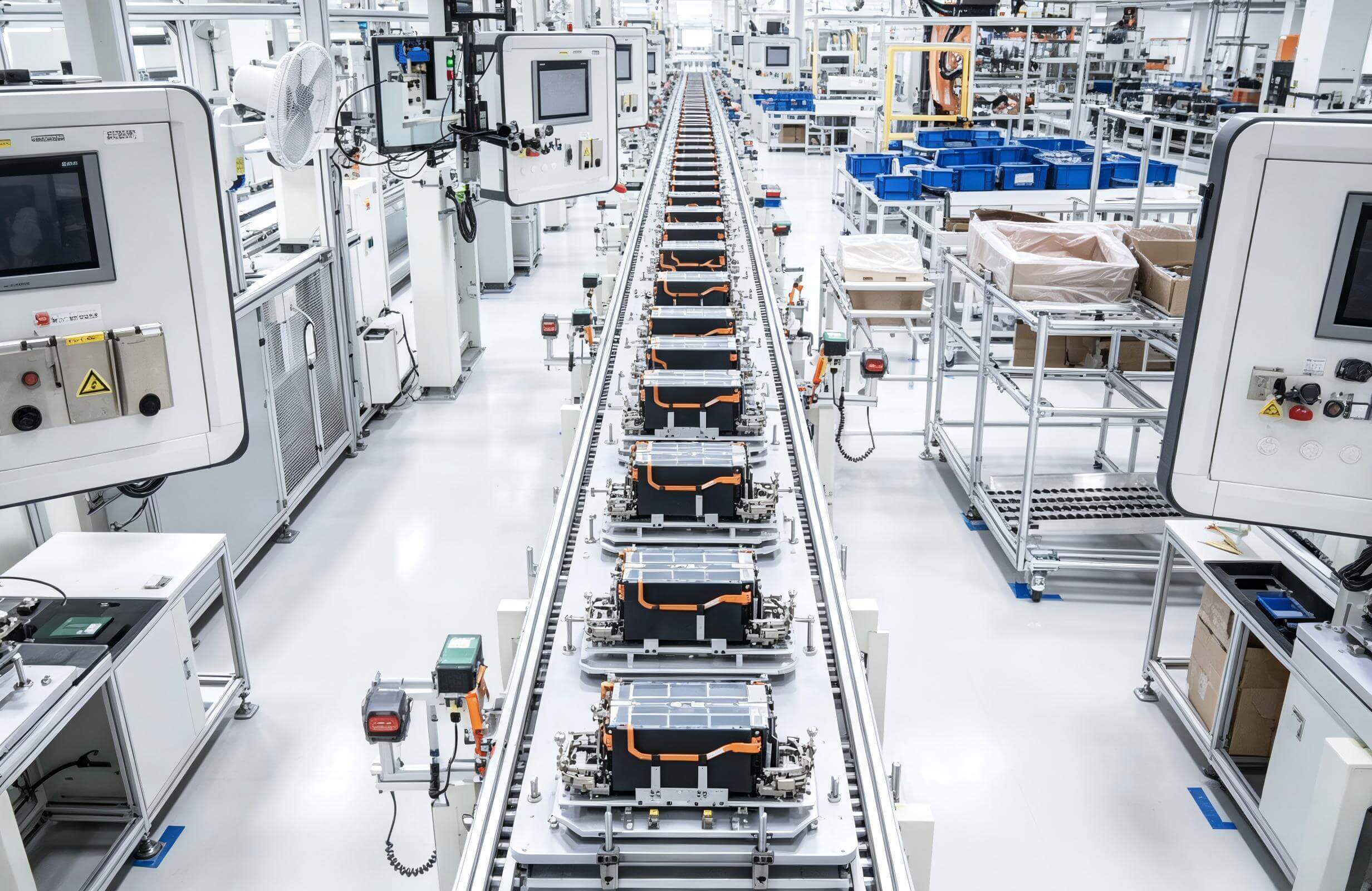
For B2B buyers, choosing the supplier can be as important as choosing the battery itself. A reliable manufacturer should be able to support the project from product selection through delivery and after-sales service.
Manufacturing Capability
Check whether the supplier has its own production and quality-control capabilities.
Engineering Support
The supplier should understand load requirements, system configuration, and project-specific energy storage design.
B2B Customization
OEM, communication protocols, branding, capacity, and system configuration may be important for distributors and solution providers.
Export Experience
International projects require appropriate documentation, packaging, transportation support, and market-specific compliance.
The Short Answer
To choose the right energy storage system for a solar project, first determine energy demand and required power. Then evaluate backup duration, PV capacity, application type, safety requirements, and future expansion.
For smaller integrated applications, an All-in-One system can simplify deployment. For larger commercial and industrial projects, a high-capacity ESS with integrated EMS, BMS, PCS, and safety systems may be more appropriate.
The best system is not necessarily the largest battery. It is the system that matches the project’s actual energy, power, operational, and expansion requirements.
Frequently Asked Questions
Need Help Choosing an Energy Storage System?
Share your project requirements with GreenPower, including load power, required backup time, PV capacity, and application type. Our team can help you evaluate a suitable energy storage configuration.
Post time: Sep-09-2026


