



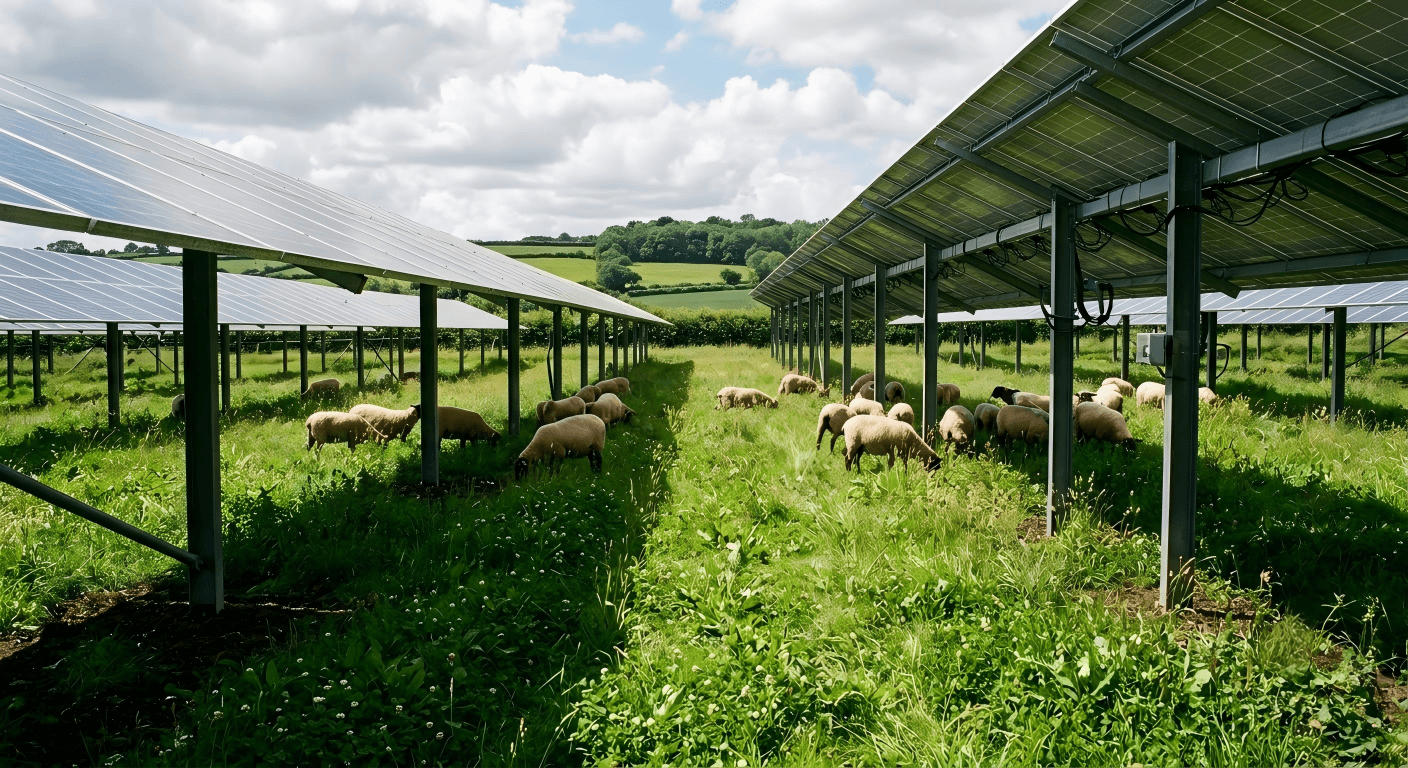
Grass grows better under solar panels because the shade reduces soil evaporation, lowers ground temperature, and captures extra moisture from condensation — creating a cooler, more water-efficient microclimate for plants. This effect is at the core of agrivoltaics, a growing approach that combines solar power generation with land conservation and farming.
Have you ever visited a solar farm and noticed that the grass beneath the panels often looks greener and healthier than the surrounding vegetation? At first glance, it seems counterintuitive — plants need sunlight to grow, so wouldn’t shade from photovoltaic (PV) panels limit growth? In many regions around the world, the opposite is true.
What Is Agrivoltaics?
Agrivoltaics is the practice of combining solar photovoltaic installations with agricultural production, enabling both renewable energy generation and farming to take place on the same land. It’s gaining traction as a practical solution to competing land-use demands between clean energy and food production.
1. Solar Panels Help Soil Retain Moisture
For many plants, especially in hot climates, water availability matters more than maximum sunlight exposure. Direct sunlight heats soil throughout the day, causing rapid evaporation — as the ground dries out, grass experiences water stress and has to work harder to survive.
Solar panels create partial shade that helps:
- Reduce soil evaporation
- Keep the ground cooler during peak temperatures
- Preserve moisture for longer periods
Shaded areas beneath solar panels can retain significantly more soil moisture than fully exposed ground, allowing grass to stay greener for longer, particularly during dry seasons.
2. Morning Condensation Provides Extra Water
Solar panels also contribute a small but valuable source of moisture. During cool nights, water vapor condenses on the panel surface; as morning temperatures rise, these droplets slowly drip onto the soil below.
Rainwater behaves similarly — instead of dispersing evenly, it’s naturally directed toward panel edges, concentrating water around plant root zones. This isn’t a replacement for irrigation, but it does provide additional moisture that supports healthier vegetation.
3. Less Heat Stress Means More Efficient Photosynthesis
More sunlight doesn’t always mean faster growth. Plants have a limit called the light saturation point — beyond it, excessive sunlight and heat trigger photoinhibition, a protective response that actually reduces photosynthesis.
Beneath solar panels, plants receive filtered sunlight instead of intense direct radiation. Combined with cooler temperatures, this creates a more favorable environment for steady growth throughout the day, rather than a struggle against extreme heat.
How Grass Improves Solar Panel Efficiency
The relationship between vegetation and solar panels works both ways — healthy grass doesn’t just benefit from the panels, it can improve how they perform.
Natural Cooling
Solar panels operate more efficiently at lower temperatures. Healthy grass releases moisture through transpiration, cooling the surrounding air. This natural cooling effect may reduce panel operating temperatures and improve energy output, especially during hot summer months.
Reduced Dust Accumulation
Bare soil is easily disturbed by wind, creating dust that settles on solar panels and blocks sunlight from reaching the photovoltaic cells. Grass stabilizes the soil, limiting dust generation and helping panels stay cleaner between maintenance cycles.
Better Land Management
Maintaining vegetation beneath solar arrays can also:
- Reduce soil erosion
- Improve biodiversity
- Support pollinators
- Lower long-term land maintenance costs
The Growing Future of Agrivoltaics
Agrivoltaics is expanding worldwide. Across Europe, North America, Australia, and Asia, solar developers are designing projects that let agricultural activity continue beneath elevated solar installations. Common examples include:
- Sheep grazing in solar farms
- Pollinator-friendly wildflower habitats
- Vegetable production
- Berry cultivation
- Mushroom farming
- Vineyards and orchards
Instead of competing for land, agriculture and renewable energy can work together to maximize productivity while reducing environmental impact.
GREEN POWER’s Vision for Sustainable Solar
At GREEN POWER, we believe solar energy should do more than generate electricity. Well-designed photovoltaic systems can protect the land, improve environmental sustainability, and create long-term value for communities and businesses alike.
As agrivoltaics continues to evolve, it demonstrates that clean energy and healthy ecosystems are not competing goals — they are complementary parts of a greener future.
Frequently Asked Questions
Does grass really grow better under solar panels?
In many climates, yes. Partial shading helps reduce evaporation, lowers soil temperatures, and decreases plant stress, allowing grass to remain healthier than vegetation exposed to continuous direct sunlight.
Do solar panels damage farmland?
Not necessarily. Modern agrivoltaic systems are specifically designed so that farming and solar power generation can coexist on the same land.
Can crops grow beneath solar panels?
Many shade-tolerant crops perform well under solar panels, including leafy vegetables, berries, herbs, and certain forage grasses. Suitability depends on crop type, local climate, and system design.
What is agrivoltaics?
Agrivoltaics is the practice of combining solar photovoltaic installations with agricultural production, enabling both renewable energy generation and farming to take place on the same land.
Final Thoughts
The healthier grass beneath solar panels is more than an interesting observation — it illustrates how thoughtful engineering can work with nature rather than against it. As renewable energy continues to expand, agrivoltaics offers a promising path toward producing clean electricity while conserving water, supporting biodiversity, and making better use of valuable land resources.
Post time: Jul-17-2026


