




Africa continues to face a major electricity-access challenge, particularly in rural and underserved communities.
In many areas, extending traditional national grids can be expensive and technically difficult. This has created growing opportunities for Africa minigrids powered by renewable energy and battery storage.
One of the major initiatives supporting this development is the Africa Minigrids Program (AMP), a country-led technical assistance program supported by the Global Environment Facility (GEF) and implemented by the United Nations Development Programme (UNDP) together with the Rocky Mountain Institute (RMI), the African Development Bank (AfDB), and national partners. The program works across 21 African countries to improve the financial and commercial viability of renewable-energy minigrids.
What Are Africa Minigrids?
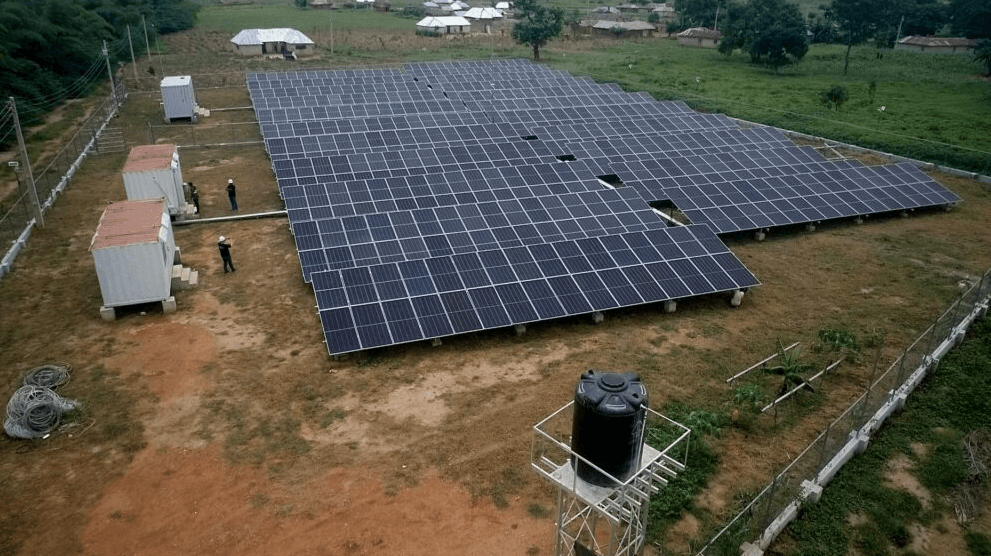
Africa minigrids are localized electricity networks that combine power generation, energy storage, distribution equipment, and electricity consumers within a defined area.
A typical solar minigrid may include:
- Solar photovoltaic (PV) panels
- Battery energy storage systems
- Solar inverters
- Energy management systems
- Distribution networks
- Backup generators when required
- Smart metering and monitoring systems
Unlike a standalone solar home system designed for one household, a minigrid can supply electricity to multiple consumers.A minigrid can operate independently from the national grid or, depending on its design and local regulations, interact with the central electricity network.
For rural communities, this flexibility makes minigrids an important option for improving electricity access while integrating renewable energy.
Why Are Africa Minigrids Important?
The importance of Africa minigrids comes from the combination of energy-access challenges, falling renewable-energy costs, and increasing demand for reliable electricity.
According to UNDP, renewable-energy minigrids, particularly solar-battery minigrids, have significant potential to address electricity-access gaps in Africa. UNDP identifies falling costs of solar modules, batteries, and energy-efficient appliances as important factors supporting the development of the minigrid market.
1. Expanding Rural Electricity Access
Many rural communities are located far from existing transmission and distribution infrastructure.
Building conventional grid infrastructure across sparsely populated areas can require substantial investment. Solar minigrids can instead generate and distribute electricity closer to where it is needed.
This makes Africa minigrids particularly suitable for remote villages and underserved communities.
2. Combining Solar Power and Battery Storage
Solar energy production changes throughout the day. Electricity demand, however, does not stop when the sun goes down.
Battery storage solves this challenge by storing excess solar electricity during periods of high solar generation and supplying power when solar production decreases.
A typical solar-battery minigrid can therefore follow this basic energy flow:
Solar PV → Inverter → Battery Storage → Distribution Network → End Users
This combination can provide more reliable electricity while reducing dependence on diesel generators.
3. Supporting Local Businesses
Reliable electricity is not only about household lighting.Electricity enables rural businesses to operate:
- agricultural equipment
- workshops
- telecommunications equipment
- shops
- other productive-use applications
For this reason, the development of Africa minigrids can support local economic activity as well as basic electricity access.
4. Reducing Dependence on Diesel Generation
Diesel generators are widely used in areas where grid electricity is unavailable or unreliable. However, fuel costs, transportation, maintenance, and emissions can make diesel-based electricity expensive.
Solar PV combined with battery storage provides an opportunity to reduce diesel consumption or replace diesel generation in suitable applications.
Hybrid minigrids can also combine solar, batteries, diesel generators, and other energy sources according to the requirements of a specific project.
What Is the Africa Minigrids Program (AMP)?
The Africa Minigrids Program (AMP) is a country-led technical assistance initiative designed to help develop early-stage minigrid markets and create conditions for greater private investment.
The program is funded by the Global Environment Facility, with UNDP implementing the program together with RMI, AfDB, national governments, and other stakeholders. Its objectives include improving the financial viability of renewable-energy minigrids, reducing costs, supporting innovative business models, and encouraging commercial investment.
The AMP operates through national projects as well as regional knowledge-sharing and technical assistance activities.
According to UNDP, its national projects focus on areas including:
- Policy and regulation
- Business model innovation
- Private-sector participation
- Innovative financing
- Digitalization
- Knowledge management
- Monitoring and evaluation
These areas are designed to help create a stronger foundation for the long-term development of Africa minigrids.
Which Countries Are Included in the Africa Minigrids Program?
The AMP covers 21 African countries:
Angola, Benin, Burkina Faso, Burundi, Chad, Comoros, Democratic Republic of the Congo, Djibouti, Ethiopia, Eswatini, Liberia, Madagascar, Malawi, Mali, Mauritania, Niger, Nigeria, São Tomé and Príncipe, Somalia, Sudan, and Zambia.
The countries represent different market conditions, languages, geographic environments, and levels of electricity access.
Recent implementation also shows that the program continues to develop at the national level. For example, Zambia officially launched its AMP national program in July 2026, with the initiative focused on building a sustainable and investable minigrid market for rural communities.
Nigeria, Somalia, Malawi, Eswatini, and other participating countries have also developed national AMP projects addressing renewable-energy minigrid investment and electricity access.
How Solar Battery Storage Enables Africa Minigrids
Battery storage is one of the most important components of modern solar minigrids.
During the daytime, solar panels can produce electricity for immediate consumption while charging the battery. When solar production falls, the battery can discharge to help maintain electricity supply.An integrated energy storage system can also provide:
- Energy shifting between daytime and nighttime
- Backup power
- Load management
- Better solar utilization
- Reduced diesel consumption
- Improved power reliability
- Remote monitoring and control
For larger or more complex projects, an energy management system can coordinate solar generation, batteries, generators, grid power, and loads.This makes battery storage an important foundation for scalable Africa minigrids.
What Makes a Successful Minigrid Project?
A successful minigrid requires more than installing solar panels and batteries.Project developers should consider:
Energy Demand
Understanding how much electricity households, businesses, schools, farms, and public facilities require is essential for correct system sizing.
Battery Capacity
Battery capacity should match expected demand, solar generation, backup requirements, and the desired operating strategy.
Local Regulations
Minigrid developers need to understand local licensing, electricity tariffs, technical standards, and grid-interconnection requirements.
Business Model
Long-term financial sustainability is critical. Pay-as-you-go systems, prepaid metering, productive-use applications, and other innovative models can help improve project economics.
Operation and Maintenance
Remote monitoring, preventive maintenance, spare parts, and local technical support can significantly influence the long-term performance of a minigrid.
GreenPower’s Minigrid Solutions for Africa
GreenPower provides integrated photovoltaic and energy storage solutions designed for different renewable-energy applications across Africa.
Our solutions can combine:
Solar PV + Battery Storage + Inverter + Energy Management + Monitoring
This integrated approach can help project developers and energy businesses design flexible systems for rural electrification, backup power, commercial applications, and distributed energy projects.
GreenPower has experience supporting microgrid and solar-storage projects in markets including Nigeria, Rwanda, Senegal, Madagascar, and other African regions.
For projects requiring customized system design, battery capacity, inverter configuration, monitoring, or other technical requirements, our engineering team can work with customers to develop an appropriate solution.
Contact GreenPower to discuss your minigrid project and energy-storage requirements.You can also learn more about decentralized solar solutions in our guide to how solar home systems work.
The Future of Africa Minigrids
The development of Africa minigrids is closely connected to the future of rural electrification, renewable energy, and decentralized power systems.
As solar panels, batteries, power electronics, digital monitoring, and energy-management technologies continue to develop, minigrids can become increasingly practical for communities that are difficult or expensive to connect to conventional electricity infrastructure.
Programs such as AMP are also helping improve policy frameworks, business models, financing mechanisms, and private-sector participation.
For energy companies, distributors, EPC contractors, project developers, and investors, this creates new opportunities across Africa’s rapidly developing distributed-energy market.
GreenPower is committed to supporting these opportunities with integrated solar PV and energy storage solutions for African energy projects.Looking for a reliable solar and battery solution for your Africa minigrid project? Contact GreenPower to discuss your requirements.
–
Website:www.fgreenpv.com
Email:Info@fgreenpv.com
WhatsApp:+86 17311228539
Post time: Aug-19-2026


