




一、 Background and Global Trends Driving the Rise of Solar PV
1. Global Warming as a Catalyst for Solar Energy Development
The extensive use of fossil fuels has been a major driver of global warming. This has led to a sharp increase in extreme weather events, rising disaster risks, severe impacts on agriculture and food security, and growing threats to human health.
2.Government Policy Support
In response to climate change, countries worldwide are committing to emissions reduction targets and restructuring their energy systems.
The United Nations General Assembly resolution A/RES/60/199 — “Promotion of New and Renewable Sources of Energy” has played a key role in encouraging global adoption and cooperation in renewable energy, including solar PV. The resolution emphasizes technological research, sustainable energy access, and fairness in the global energy transition.

3.Why Solar PV Stands Out
Solar photovoltaic power generation produces zero carbon emissions during operation, consumes no fossil fuels, and has a lifecycle carbon footprint significantly lower than traditional energy sources.
Among all low-carbon technologies, solar PV ranks among the best options in terms of carbon reduction efficiency, scalability, and rapid cost decline.
4.Global Trends in the Solar Photovoltaic Industry
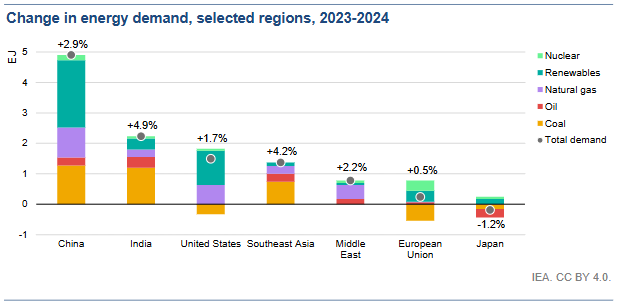
The “Flattening” of the Global Carbon Emissions Growth Curve.Over the past 10–15 years, a large share of newly added electricity demand has been met by solar PV rather than coal-fired power generation.
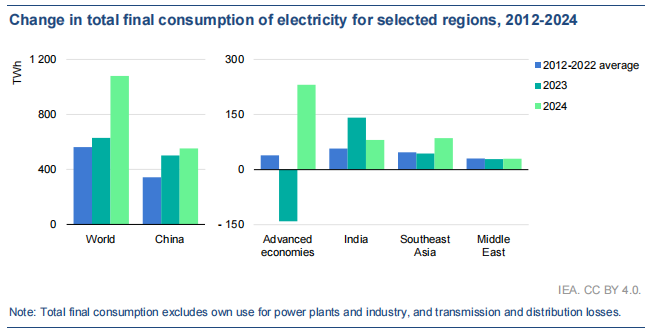
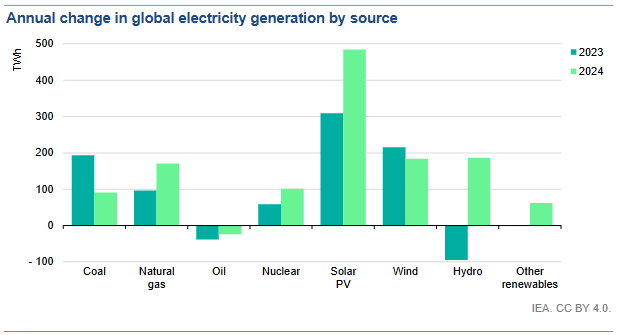
Compared with the average annual growth levels from 2012 to 2022, nearly all regions experienced faster electricity demand growth in 2024. Globally, electricity consumption increased by 1,080 TWh, nearly twice the average annual increase of the past decade — with solar playing a key role in meeting this demand.
二、Global PV Expansion by Region
1. China: The World’s Largest Solar Market and Manufacturing Hub
1.1 World-Leading Installed Capacity
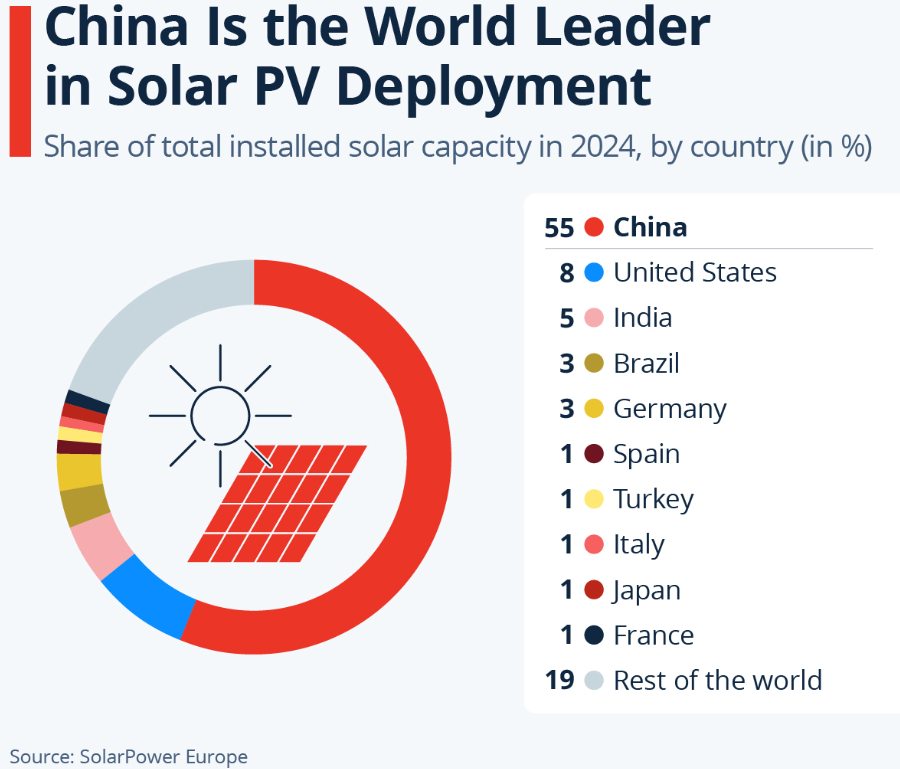
By the end of 2024, China’s cumulative installed solar PV capacity reached 886.66 GW, with 277.17 GW of new installations in a single year — a historic record representing approximately 45% year-on-year growth.
1.2 Dominant Position in the Global Supply Chain
China is not only the world’s largest solar PV deployment market but also the global center for PV manufacturing and exports. Chinese companies occupy a majority share of the global PV supply chain.
2. Europe: Policy-Driven High-Speed Growth
2.1 Mature Subsidy and Incentive Frameworks
Major European markets such as Germany, Spain, Italy, and France have established well-developed support mechanisms, including:Feed-in tariffs (FIT) or Contracts for Difference (CfD)/Investment subsidies and tax incentives/Rooftop solar incentives for residential and commercial users.
Germany has long been one of Europe’s largest PV markets, while Spain and Italy have emerged as key growth engines in Southern Europe thanks to strong solar resources and large-scale ground-mounted projects.
2.2 Rapid Adoption of Rooftop and Distributed PV
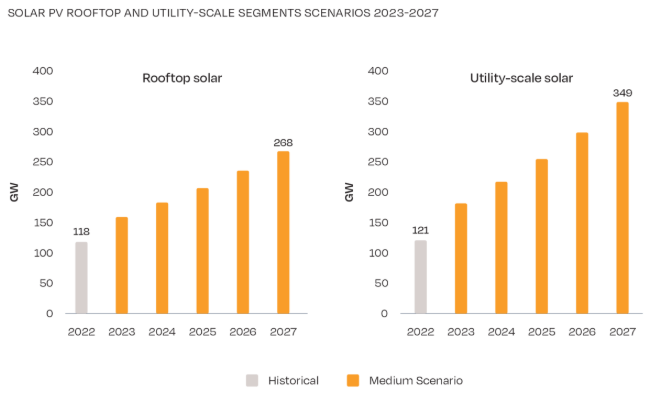
A defining feature of Europe’s solar growth is the increasing share of distributed rooftop systems.
Under high electricity prices, residential and commercial users reduce energy costs through self-consumption with surplus power fed into the grid. This end-user–driven market structure has made solar PV not only an energy transition tool, but also a clear economic choice for households and businesses.
3. United States: Policy Incentives and the Reshoring of Manufacturing
3.1 Long-Term Certainty from the Inflation Reduction Act (IRA)
Passed in 2022, the Inflation Reduction Act (IRA) is widely regarded as the most ambitious clean energy policy in U.S. history.It provides long-term, stable tax incentives for solar projects, significantly reducing investment uncertainty and enabling developers, financiers, and manufacturers to plan over longer time horizons.
3.2 Reshoring of Solar Manufacturing
Beyond stimulating installations, U.S. policy explicitly promotes domestic manufacturing.
Through additional subsidies and tax credits, production capacity for modules, cells, and inverters is gradually returning to the U.S., improving supply chain security and transforming the country from a pure “deployment market” into a dual-focus market combining manufacturing and deployment.
4. India and Southeast Asia: High-Growth Emerging Markets
4.1 Rapidly Growing Electricity Demand and Supply Gaps
Driven by population growth, industrialization, and urbanization, India and many Southeast Asian countries face long-term power supply shortages.
Compared with fossil fuels, solar PV offers short construction cycles, controllable costs, and rapid deployment, making it a practical solution to power deficits.
4.2 Exceptional Solar Resource Conditions
India, Vietnam, Thailand, and the Philippines are located in low-latitude regions with abundant year-round sunlight, giving solar PV strong economic competitiveness.
4.3 Government-Led Large-Scale Tender Models
India and several Southeast Asian countries rely on government-led large-scale PV tenders.
Through centralized bidding and long-term Power Purchase Agreements (PPAs), governments attract private capital, reduce generation costs, and accelerate capacity expansion.
5. Middle East & Africa: From Oil to Solar
5.1 Record-Low Solar Electricity Prices
With vast land resources, extremely high solar irradiation, and strong policy backing, Middle Eastern countries have repeatedly set global records for the lowest solar PV electricity prices through international tenders.
These utility-scale projects demonstrate the immense cost advantages of solar at scale.
5.2 Strong Demand for Off-Grid and Microgrid Solutions in Africa
In Africa, the value of solar PV lies largely in basic energy access. Many remote areas lack stable grids, making off-grid and microgrid PV systems essential for electricity and basic services.
5.3 Deep Integration with Agriculture, Water Supply, and Infrastructure.
Another defining feature of solar deployment in the Middle East and Africa is its close integration with real-world applications, such as:Solar-powered agricultural irrigation systems/Solar water pumps for drinking water and livestock supply/PV-supported infrastructure and public services.
三、Trends in Solar PV Deployment Models
1. From Centralized Projects to a Hybrid “Utility-Scale + Distributed” Model
In the early stages of industry development, large centralized solar power plants were the primary way for countries to scale capacity.
In recent years, however, the share of distributed rooftop PV has risen sharply, fundamentally reshaping the market.Commercial and industrial rooftops are expanding rapidly, helping businesses lower electricity costs and improve energy control through self-consumption.
Residential solar is accelerating across Europe, North America, and parts of Asia, becoming a key entry point for household energy transitions.
Globally, distributed and rooftop systems now account for nearly half of new solar installations, signaling a shift from system-level investments to end-user–driven energy choices.
2. Solar + Energy Storage Becomes the New Normal
The integration of solar PV with energy storage systems is becoming standard in new projects worldwide.
Energy storage allows excess solar power to be stored and discharged during peak demand or low-sunlight periods, delivering:Improved grid stability/Higher solar utilization rates/In many countries, storage is now incorporated into PV project design, particularly in:Grid-constrained regions/Off-grid or weak-grid environments/Commercial peak-shaving applications.
This trend marks a shift from standalone power generation to comprehensive energy solutions.
3. Deep Integration of Solar with Agriculture, Water, and Industry
Beyond grid-connected power generation, application-driven solar deployment is emerging as a major growth area, especially in agriculture, water supply, and industry.
3.1 Agrivoltaics: Dual Use of Land and Energy
Solar systems are increasingly installed above farmland, pastures, and greenhouses, enabling simultaneous electricity generation and agricultural production.
3.2 Solar Water Pumps and Irrigation Systems
In regions lacking reliable electricity or fuel supplies, solar water pumps have become essential solutions for irrigation, livestock watering, and domestic water use.
3.3 Self-Consumption in Industrial Parks
Solar PV is widely adopted in industrial parks through rooftop and on-site installations, allowing enterprises to:Achieve partial or high self-consumption/Reduce long-term electricity costs/Improve energy supply stabilityAmid rising energy price volatility, this model is becoming increasingly attractive for manufacturing and industrial zones.
The global solar market is shifting from a single, centralized deployment model toward a diversified structure that combines utility-scale projects, distributed rooftop systems, energy storage, and application-specific solutions. This evolution is transforming solar PV into a flexible energy infrastructure rather than merely a power generation technology.
FAQ
Why is solar photovoltaic power growing so fast globally?
Because solar photovoltaic power offers zero-emission electricity, low costs, fast deployment, and strong policy support.
Which countries lead the global solar PV market?
China, the United States, and Europe lead the global solar photovoltaic power market, followed by India, Southeast Asia, the Middle East, and Africa.
How does solar PV support off-grid and rural development?
Through off-grid solar PV systems, solar water pump solutions, and decentralized solar photovoltaic power generation.
Post time: Feb-03-2026


