




With the continuous advancement of technology, the concept of outdoor power sources is becoming increasingly popular. So, what exactly is an outdoor power source?
1. What is an Outdoor Power Source?
An outdoor power source is a lithium battery storage device designed to meet outdoor power needs. It is characterized by its large capacity, compact size, and versatile interfaces. With both direct current output (DC 5-20V) and alternating current output (AC 220V) capabilities, it can simultaneously support the charging of multiple devices.
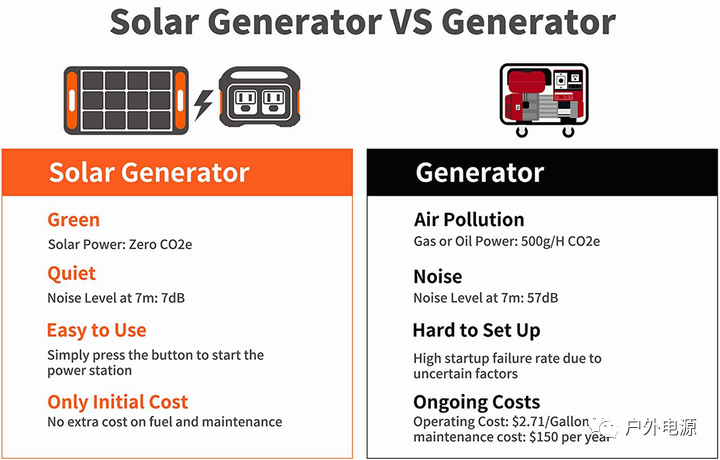
In addition to the common term "outdoor power source," other key terms include portable power station, mobile power source, outdoor mobile power source, and solar generator used in conjunction with solar panels.
2. Operating Principle
An outdoor power source consists of three key systems: a lithium-ion battery pack with a Battery Management System (BMS), a DC-DC conversion system, and an inverter system. The lithium-ion battery pack stores electrical energy, the DC-DC conversion module provides various DC interfaces (USB-A, TYPE-C, car charging port), and the inverter system converts the electrical energy into 220V alternating current output. The entire charging and discharging process is controlled by the BMS battery management system and the inverter system's software and hardware to ensure the safe operation of the product.
3. Differences between GP brand outdoor power supplies, power banks, and car inverters.
Although in terms of functional output, an outdoor power source may be simplistically understood as a combination of a power bank and a car inverter, there are inherent differences in usage and technical complexity.
Power Bank: Small capacity, low output power, relatively simple charging and discharging management.
Outdoor Power Source: Large capacity, multiple battery cells, requires communication with the inverter system for charging and discharging management. It must use a battery management system (BMS) with software (algorithm).
Car Inverter: Needs to draw power from a vehicle or use a separate battery set. Limited output power, and attention is required when connecting to a car battery to avoid feedback issues.
| Feature | Standard Power Bank | Outdoor Power Source / Portable Power Station | Car Power Inverter |
|---|---|---|---|
| Battery Capacity | Small capacity | Large-capacity energy storage | Depends on the vehicle battery |
| Output Types | Mainly DC output | DC + AC output for multiple devices | AC output (powered by car battery) |
| Battery Management System (BMS) | Basic safety protection | Advanced BMS for higher safety and longer lifespan | Relies on vehicle battery and external protection |
| Off-Grid Capability | Not suitable for off-grid use | Yes – true off-grid power solution | No (requires a vehicle power source) |
| Typical Applications | Smartphones, small electronics | Camping, RVs, outdoor activities, emergency backup power | Temporary power supply in vehicles |
As can be seen from the table, the outdoor power supply that integrates large-capacity energy storage, intelligent battery management and AC output is suitable for higher power devices and scenarios that do not require continuous connection to the power grid.
4.So, in what scenarios are outdoor power supplies typically used?
1. Outdoor Activities: Outdoor power supplies can power various devices such as mobile phones, laptops, cameras, LED lights, fans, projectors, and small appliances like rice cookers and microwave ovens (depending on their wattage) in various scenarios including outdoor adventures, camping, road trips, photography, and picnics.
2. RVs and Campervans
Equipped with solar panels (such as foldable solar panels), they can achieve true off-grid power generation, making the RV's electrical system more autonomous and environmentally friendly.
3. Emergency Backup Power Supply: Provides power to critical home devices (Wi-Fi routers, medical equipment, lights, etc.) during power outages to prevent power loss for important communication and daily life equipment.
5.So how do you choose a suitable outdoor power supply?
1. Check Output Power and Interfaces
Output power is one of the most important factors when selecting an outdoor power source or portable power station, as it determines which devices can be powered.
200W output: Suitable for charging small to medium-sized devices such as smartphones, tablets, cameras, and laptops.
1000W and above: Capable of powering high-power appliances, including electric stoves, refrigerators, coffee makers, and other outdoor or emergency household devices.
A high-quality portable power station should also offer multiple output interfaces to ensure compatibility with different devices. Common interfaces include:
AC outlets
USB-A and USB-C ports
DC outputs
Car charging sockets
2. Battery Type and Capacity
The battery type and capacity directly affect the runtime, safety, and lifespan of an outdoor power supply.
Lithium-ion batteries: Lightweight and compact, making them suitable for portable designs. However, they generally have a **shorter cycle life, and performance degradation may occur faster under frequent charging, high power loads, or high-temperature conditions.
Lithium iron phosphate batteries (LiFePO₄): Slightly heavier, but offer a much longer cycle life (≥2500 cycles), enhanced thermal stability, and higher safety. LiFePO₄ batteries are ideal for long-term use, off-grid power, and emergency backup applications.
A larger battery capacity (measured in Wh) allows the outdoor power source to supply electricity for longer periods, especially when running multiple devices or high-power equipment.
3. Charging Methods
An excellent outdoor power supply or portable power station should support multiple charging options for maximum flexibility, including:
Household wall socket charging
Car charging
Solar charging, which is environmentally friendly and especially suitable for camping, RV travel, and long-term outdoor or off-grid use
4. Additional Features and Safety Functions
Modern outdoor power sources are designed with advanced safety and convenience features, such as:
Built-in LED lighting for outdoor illumination and emergency use
Waterproof and dustproof design** for harsh outdoor environments
Intelligent protection systems, including short-circuit protection, over-temperature protection, and overload protection, to ensure safe and reliable operation
Therefore, whether considering safety, portability, battery life, or the range of applicable electronic devices, the outdoor power source presents a more comprehensive solution.
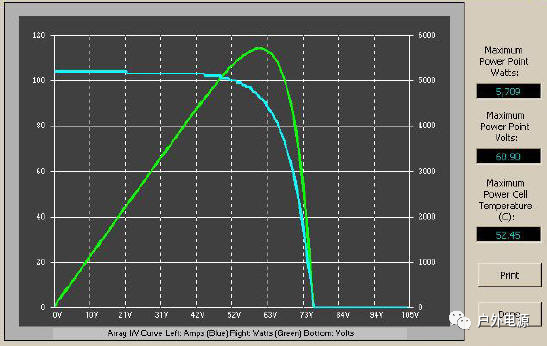
In summary, the three key distinctions of outdoor power sources include support for AC output, the presence of software protection functions, and support for off-grid use. Off-grid use implies independence from constant connection to external power sources, and it allows complete reliance on solar charging. Thus, outdoor power sources often incorporate MPPT algorithms to optimize the charging efficiency of solar panels by continually tracking the highest operating voltage and current values under current sunlight conditions.
GreenPower is always here for you and your new energy business:
Whatsapp: +86 18221155255
+86 17311228539
Email: Steven.Chen@fgreenpv.com
Info@fgreenpv.com
Post time: Jan-09-2024


