




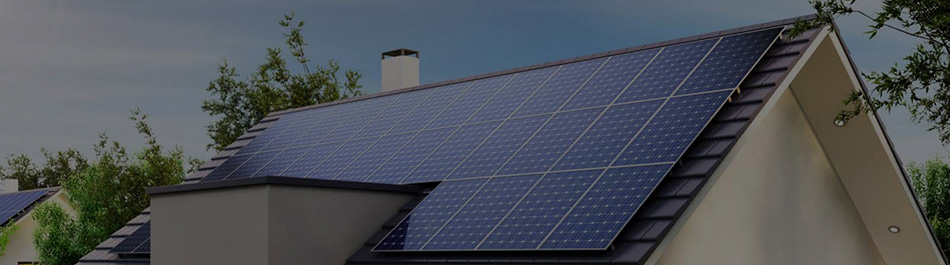
Among the macro trends reshaping industrial BESS procurement, one of the most consequential is also the most literal: large energy consumers are increasingly running their own high-voltage cables straight from a solar farm or battery asset into their facility, bypassing the public grid entirely. This is the direct-wire power purchase agreement (PPA) — and it’s quickly becoming one of the defining features of behind-the-meter (BTM) industrial storage.
For hardware suppliers and system integrators, this shift changes what “winning the deal” even looks like. It’s no longer just about selling the lowest-cost battery rack or the highest-efficiency inverter — it’s about being able to spec, engineer, and stand behind an entire private power system. This post explains what a direct-wire PPA actually is, why it’s gaining ground so fast, what’s happening inside Tesla’s Gigafactory Texas as a real-world blueprint, and what hardware buyers need to think about if they want to build one.
What Is a Direct-Wire PPA?
A traditional corporate PPA is largely a financial arrangement. A company agrees to buy a fixed amount of renewable power from a solar or wind project, but the electrons themselves still flow through the public grid, and the buyer’s “green” claim is really a paper credit — a virtual PPA settled on price, not physical delivery. The buyer’s meter still shows utility power; the renewable contract is reconciled separately on paper, usually monthly or annually.
A direct-wire PPA is different. It’s a physical interconnection: a private high-voltage line runs directly from a nearby generation or storage asset — a solar farm, a battery installation, or both — into the buyer’s facility, without touching the utility’s transmission and distribution network. The buyer isn’t just purchasing renewable attributes; it’s physically consuming power that never enters the public grid.
It’s worth distinguishing this from a microgrid, which is a self-contained system capable of generating, storing, and managing its own power independently of the main grid. A direct-wire PPA is narrower: it’s specifically the private physical link between one generation/storage asset and one buyer. In practice, though, many direct-wire setups end up built on microgrid-style architecture, since the buyer still needs local control and balancing once the private line is in place.
That distinction matters because bypassing the transmission and distribution system means bypassing the fees, congestion charges, and price volatility that come with it — which is exactly what’s driving large energy consumers toward this model.
Why Direct-Wire and BTM Storage Are Growing Now
Three converging pressures are behind the shift:
- · Volatile wholesale electricity prices. Companies with large, predictable industrial loads are less willing to absorb wholesale market swings, especially in regions prone to extreme weather-driven price spikes. A single multi-day cold snap or heat wave can turn an otherwise predictable power budget into a seven-figure surprise.
- · Rising transmission and distribution fees. Even as generation costs fall, the fees utilities charge to move power across the grid keep climbing — and apply regardless of whether the power comes from a coal plant or a solar farm. A direct-wire connection sidesteps them, since the power never uses the shared T&D network at all.
- · Grid interconnection queues. In many markets, connecting new generation to the public grid now takes years due to backlogged interconnection studies. A private line to a dedicated asset can bypass much of that queue, since it doesn’t require the same utility-side study and approval process as a grid-connected project.
For companies with large, steady loads — data centers, EV and battery manufacturing plants, logistics hubs — the economics increasingly favor owning or contracting a dedicated, physically connected energy source over relying entirely on the public grid. The math tends to favor facilities that run near-continuously, since the fixed cost of the private line and dedicated generation asset is spread across more operating hours.
Case Study: Tesla Gigafactory Texas
Tesla’s Gigafactory Texas, its EV and battery manufacturing campus and global headquarters in East Austin, is one of the clearest real-world examples of a BTM, direct-wire-style industrial energy setup in operation today.
The facility has been building out one of the largest rooftop solar installations in the world — roughly 70,000 panels across the plant’s roughly 10-million-square-foot roof, targeting around 30 MW of capacity once complete, with the first phase already delivering roughly 10 MW. That solar output feeds directly into an onsite Megapack battery energy storage system, reportedly including dozens of 2 MW Megapack units, giving the site the ability to store solar generation and manage its own localized load rather than depending entirely on the Texas grid (ERCOT).
The motivation is familiar to anyone following grid reliability concerns in Texas: winter storms in recent years left large parts of the state without power for days, and Tesla — like a growing number of large industrial operators — decided the cheapest long-term insurance policy was to generate and store more of its own power onsite. For a facility running continuous EV and battery production lines, even a few hours of unplanned downtime translates into real production losses, which makes the case for onsite generation and storage easier to justify on paper. Tesla has since gone further, becoming a certified electricity provider in Texas and building a separate grid-connected Megapack installation in the state, underscoring how tightly its energy business and its manufacturing operations have become linked.
Gigafactory Texas isn’t a pure direct-wire PPA in the contractual sense — the assets are Tesla-owned rather than third-party-financed — but architecturally it’s close to a private behind-the-meter microgrid: onsite generation, onsite storage, and a facility that can manage a meaningful share of its own load independent of the public grid.
The Hardware Behind a Direct-Wire System
None of this works without the right supporting hardware. A direct-wire or BTM storage installation typically requires:
- · High-capacity battery storage sized to buffer the gap between variable generation (solar, wind) and steady industrial load, governed by a battery management system (BMS) that keeps cells balanced, monitors state of charge, and protects against overcharge or overheating at scale.
- · A localized energy management system (EMS) that dispatches generation and storage assets to match real-time demand — increasingly supported by the kind of digital monitoring and predictive O&M tools now standard on large solar and storage sites.
- · Heavy-duty distribution and interconnection hardware — switchgear, transformers, protection relays — engineered for the high-voltage private line connecting the generation asset to the facility.
- · Balance of System (BOS) components that tie all of the above together safely and reliably, not just the battery cells or panels themselves.
This is where the opportunity — and the complexity — sits for B2B suppliers. A buyer building a direct-wire system doesn’t just need batteries; they need a fully engineered package that can be installed, protected, and integrated as one system. That means the battery containers, EMS software, switchgear, and protection relays all need to be specified together, tested together, and warrantied as a single system rather than as unrelated line items from different vendors. Suppliers who can deliver that complete kit, rather than components piecemeal, are positioned to capture significantly more value than those selling storage hardware alone — and to avoid the integration disputes that come up when three different vendors each blame each other for a system-level fault.
If you’re scoping generation, storage, and control components for a behind-the-meter or islanded facility, our mini-grid solutions page outlines configurable systems built around this same architecture — generation, storage, and the distribution hardware needed to tie them together.
What This Means for Industrial Buyers
Direct-wire PPAs won’t replace the public grid, and they aren’t right for every facility — the capital cost of a private line and dedicated generation asset only pencils out for large, steady loads. But for industries increasingly exposed to volatile power prices and rising transmission costs — manufacturing, logistics, data centers — the direct-wire model is moving from experimental to mainstream, and Gigafactory Texas is a useful preview of what that looks like at scale.
The buyers who get ahead of this shift are the ones treating it as a systems decision, not a battery purchase — sizing generation, storage, EMS, and interconnection hardware together as one integrated package from the start. That usually means bringing hardware suppliers into the conversation early, during load analysis and site planning, rather than after the generation and storage capacity has already been locked in — since undersized interconnection hardware or an underpowered EMS can quietly erode the savings a direct-wire setup was supposed to deliver in the first place.
Direct-Wire PPA: Frequently Asked Questions
Q1: If my facility is connected via a direct-wire PPA, do I still need a connection to the public utility grid?
Yes. A direct-wire PPA does not mean you should completely disconnect from the utility grid. Because solar and wind generation are intermittent, your facility will still need “top-up” or backup power from the public grid during periods of low generation, high factory load, or system maintenance. Maintaining a grid connection ensures uninterrupted operations.
Q2: How far can a direct-wire (private wire) connection physically run?
While technically possible over longer distances, the financial sweet spot for a direct-wire PPA is typically within more hedged kilometers (and rarely exceeding 10 km). Beyond this distance, the capital expenditure (CapEx) for private high-voltage cabling, land easements, and permitting rights-of-way quickly erodes the cost savings gained by bypassing the public grid.
Q3: Are there legal or licensing restrictions for running a private wire?
Absolutely. In most mature markets (such as the UK and EU), generating, distributing, and supplying electricity requires a formal utility license. However, “direct-wire” setups can qualify under specific “license exemptions” if they meet strict criteria (e.g., supplying a single adjacent consumer). It is critical to work with an experienced engineering partner and legal counsel to ensure your private line does not inadvertently violate local utility regulations.
Q4: How does a Direct-Wire PPA differ from a Virtual PPA (VPPA)?
It comes down to physicality:
-
In a Virtual PPA (VPPA), no physical cables are laid. It is a purely financial hedging contract (Contract for Difference) where the developer sells power to the grid, and you settle the price difference on paper.
-
In a Direct-Wire PPA, you build physical private infrastructure (cables, switchgear, BESS) to route the electrons directly into your facility. It is the only PPA structure where you physically consume the exact green energy produced by the asset.
Website:www.fgreenpv.com
Email:Info@fgreenpv.com
WhatsApp:+86 17311228539
Post time: Jul-14-2026


