




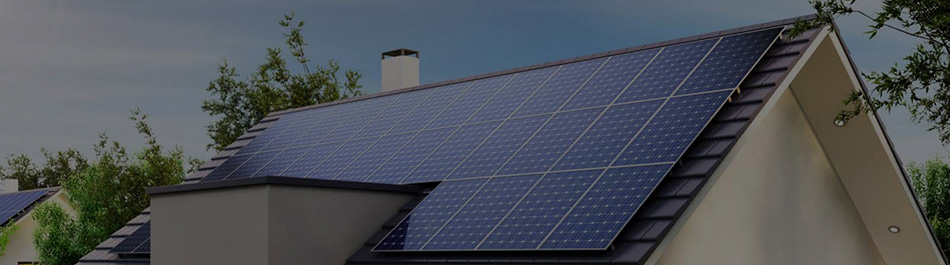
As a solar energy storage solution provider, we would like to share two successful applications of solar-powered irrigation systems in Nigeria from 2024 to 2025 to explore how solar-powered irrigation systems with energy storage system can improve efficiency, reduce costs, and replace diesel generators in rural agriculture
Challenges of Agricultural Irrigation in Nigeria
What are the main challenges facing agricultural irrigation in Nigeria?For decades, agricultural irrigation in northern Nigeria has faced multiple problems:
Prolonged droughts and highly unstable rainfall
Heavy reliance on diesel water pumps with rising fuel and maintenance costs
Unstable power grids in rural areas
Significant employment pressure on young people.
In Kano State alone, over 6,000 hectares of farmland were difficult to cultivate due to water shortages and unstable energy supplies. Despite agriculture providing employment for nearly one-third of Nigeria’s population, irrigation infrastructure has long been severely inadequate.

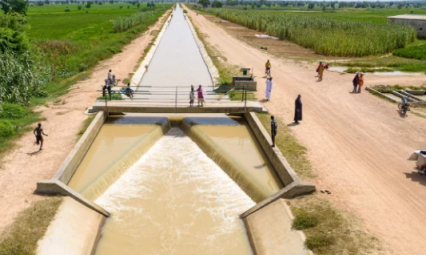
Government-led solar irrigation system solutions?
To address the challenges mentioned above, the Nigerian government and local agencies have launched agricultural irrigation modernization projects centered on solar irrigation systems. A typical off-grid irrigation solution usually includes the following components:
1.Solar photovoltaic modules. Solar panels convert solar radiation into direct current (DC), serving as the primary energy source for the entire irrigation system.
2.Solar inverters. Inverters convert DC to alternating current (AC) and match the voltage and frequency standards required by the irrigation pumps.
3. Solar water pumps. Solar water pumps can draw water from wells, rivers, or reservoirs and deliver it directly to the irrigation system, storage tanks, or filtration equipment.
4.Solar energy storage systems. Battery energy storage systems are used to store excess solar power, allowing irrigation to continue operating on cloudy days or at night, while also improving the stability of agricultural electricity supply, which is also a perfect replacement of diesel generators
Solar Irrigation Case Studies in Nigeria
Case Study 1: Off-grid Irrigation Practices of Smallholder Farmers in Adamawa State, Nigeria.
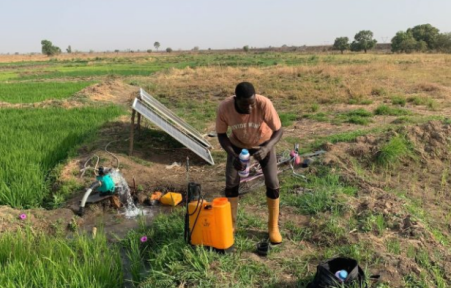
In Adamawa State, northeastern Nigeria, near Numan Bridge, some smallholder farmers have recently begun to replace their diesel generators with solar irrigation systems. For local farmers, this change was not instantaneous but rather a gradual process driven by rising fuel costs and unstable electricity supply.
Local farmer Joseph Pwanangingan stated, “After I started using solar power this planting season, irrigation became much easier, and expenses decreased significantly.” According to farmer feedback, the solar-powered irrigation systems reduced fuel-related expenses by more than 60%., and water supply became more stable even during the dry season. At the same time, crop yields and the number of plantings per year increased to varying degrees. From actual operation, the combination of solar water pumps and off-grid energy storage system provides a relatively economical and sustainable irrigation option for smallholder farmers with limited funds and scale.
Case Study 2: Solar Energy Storage Irrigation Project in Rukubi Community, Nasarawa State,Nigeria (2025).
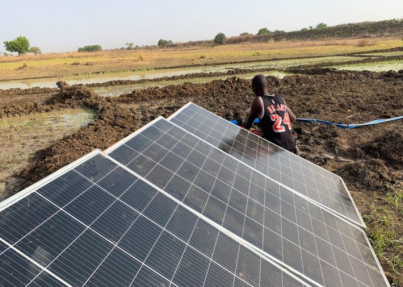
In April 2025, the Rukubi community in Nasarawa State, Nigeria, launched a solar water pumps incorporating battery energy storage. This system primarily ensures stable power supply for farmland irrigation and some initial processing stages of agricultural products. The off-grid irrigation system consists of solar panels, inverters, and a lithium battery energy storage system, employing a hybrid power supply mode to gradually reduce reliance on diesel generators while meeting daily needs.
After implementation of the solar-powered agriculture solutions, irrigation operations continued normally even under cloudy conditions, and diesel generator usage dramatically decreased. Community management reported that the solar water pump system reduced overall maintenance pressure and made long-term operating costs more manageable than the previous solution. This project served as a demonstration project in the local area, reflecting the growing value of solar energy storage in agricultural irrigation.
Why are solar irrigation systems the future of Nigeria’s and other Afirca countries’ agriculture?
From the above examples, we can summarize the common advantages of solar irrigation systems:
✅ Lower irrigation costs compared to diesel systems
✅ Achieving energy self-sufficiency in rural agriculture
✅ Improved air quality
✅ Irrigation solutions covering all agricultural households
✅ Compatible with solar energy storage and smart irrigation systems
As the cost of solar technology continues to decline, solar irrigation systems are expected to become a standard feature in agriculture worldwide.
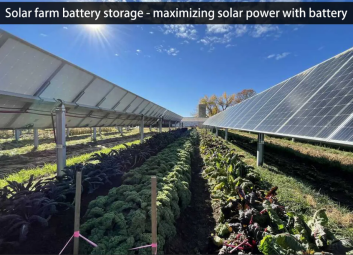
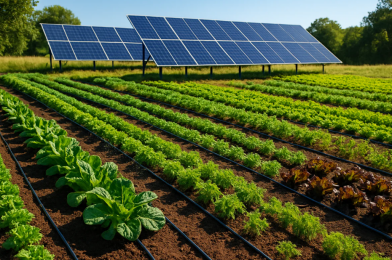
For organizations looking to deploy solar-powered irrigation systems in Nigeria or other emerging agricultural markets, understanding real-world case studies and system configurations is a critical first step.Our solar irrigation solutions integrate solar water pumps, inverters, and energy storage systems to support sustainable, off-grid agriculture..Contact us Now for a completed solar irrigation system solution!
Website:www.fgreenpv.com
Email:Info@fgreenpv.com
WhatsApp:+86 17311228539
Post time: Dec-22-2025


